How do influencers make money?
Most answers to this question are a list of income streams in the order they sound impressive. That ordering is useless to anyone deciding where to spend the next three months, because the glamorous streams are the ones that need an audience you do not have yet.
This page ranks the same streams by reliability — how predictable the money is, and how small an account it will pay. Where a number appears it comes from an operator's own published terms, read on 1 September 2026, or from a live product-feed pull we made the same day across 8,596 listings and 88 US retailers.

The income stack, ranked by reliability
Five ways creators are paid, ordered by how dependable the income is rather than by how good it looks in a year-in-review post.
1. Affiliate commission — most reliable, least glamorous
- Pays a percentage of a sale you referred. No negotiation, no invoice, no minimum audience.
- The rate is published and identical for everyone in the programme: Amazon's standard rate card runs from 0% to 10% depending on category, with most physical goods at 3–4.5%.
- It compounds. A post from March still earns in November if the link still resolves, which is the only stream on this list with that property.
- The money is small per sale and arrives late — see the terms section.
2. Paid content for brands — largest cheques, least predictable
- A negotiated fee for making something. The rate is whatever you can defend, which is why it varies more than any other stream.
- Gated by audience size and niche. Most brands will not open a conversation below a follower threshold they rarely publish.
- Lumpy by nature: three deals in a quarter and none in the next is normal, and it makes this a poor foundation for anyone who needs a monthly number.
3. Platform payouts — steady in shape, volatile in amount
- Paid by the platform for views or watch time rather than by anyone selling anything.
- The rate per thousand views is set by the platform, changes without warning, and is not something you can negotiate or lock.
- Entirely dependent on one company's policy decisions. Treat it as weather.
4. Your own product — best margin, highest cost to start
- Keeps nearly all the revenue instead of a single-digit percentage.
- Requires building, supporting and refunding the thing, which is a different job from making content.
- Realistic only once you know what your audience actually asks you for.
5. UGC production — income without an audience
- Making content for a brand to run on the brand's own channels. You are paid per asset; your follower count is close to irrelevant.
- It is freelance production work rather than influence, and it is the one stream on this list available to someone with no audience at all.
Keep reading
Why affiliate income is the unglamorous winner
Here is the argument in one sentence: affiliate is the only stream that pays a small account the same rate per sale as a large one.
A brand deal prices your audience. A platform payout prices your views. Both scale with size, which means both pay a new creator close to nothing. An affiliate programme prices the transaction — Amazon's published rate for Physical Music is 5.00% whether the buyer arrived from an account with four hundred followers or four hundred thousand. Nobody has to say yes to you first, beyond the programme's own approval.
The cost of that reliability is that the numbers are small and slow, and this is where most write-ups stop being honest. So:
What one sale actually pays
We priced four product lanes in live US retailer feeds on 1 September 2026 and applied Amazon's published standard rate for the matching category. The basket values are measured; the rates are published; the multiplication is arithmetic, not a forecast.
| Product lane | Listings priced | Median price | Published rate applied | Commission on one sale | Sales needed for $500 |
|---|---|---|---|---|---|
| Discs: Blu-ray, 4K, steelbooks | 1072 | $27.99 | All Other Categories, 4.0% | $1.12 | 447 |
| Vinyl LPs | 481 | $44.99 | Physical Music, 5.0% | $2.25 | 222 |
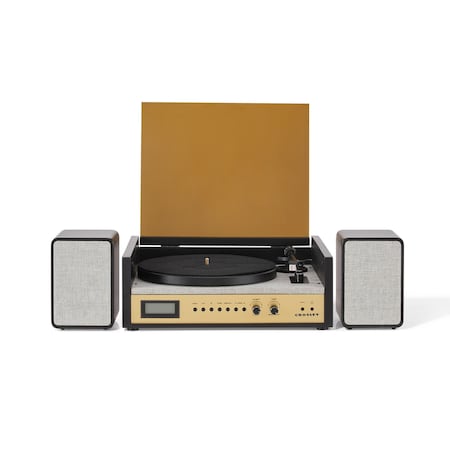
| Turntables and players | 194 | $79.99 | All Other Categories, 4.0% | $3.20 | 156 |
| Y2K fashion and accessories | 2386 | $29.00 | Shoes, Handbags & Accessories, 4.0% | $1.16 | 431 |
Read the last column before the others. To clear $500 in a month in the cheapest of these lanes you need roughly 447 completed purchases; in the dearest, about 156. Not clicks — completed, delivered, non-returned purchases.
That is the number the genre hides, and it is why basket value matters more than rate. A four-percent rate on an $79.99 turntable beats a five-percent rate on a $44.99 record by a wide margin. If you are choosing a niche on economics rather than interest, choose it on what the thing costs.
The terms that decide whether you keep it
Earning a commission and being paid one are different events, separated by rules that are published and that almost nobody reads. From the Amazon Associates operating agreement and programme policies, read 1 September 2026:
| Term | What it says | What it means for you |
|---|---|---|
| Session window | 24 hours from the click, ending early if the customer orders or clicks a different Associate's link | Your credit is short-lived and can be taken by the next link the buyer clicks |
| Time to purchase | Up to 89 days after the initial click-through to complete the order | The add-to-basket can be slow even though the session is not |
| Payment timing | Approximately 60 days following the end of the calendar month in which fees were earned | Work done in March is money received around the end of May |
| Minimum thresholds | $10 direct deposit, $10 gift card, $100 cheque with a $15 processing fee | Below the threshold nothing is paid; it rolls |
| Fine art cap | Fees capped at $200 per item however expensive the piece | High-ticket does not mean uncapped |
The 24-hour session is the one that reframes the job. You are not building a library of links that pay forever on their own schedule; you are sending someone to a shop and hoping they buy today. And the roughly sixty-day payment lag means your first affiliate income arrives about two months after the work that caused it — a fact worth knowing before you decide the strategy is not working.
One more, measured rather than quoted. We sampled 208 live affiliate destination URLs on 1 September 2026: of the 124 we could actually check, 3 had already 404'd, and they were concentrated on a peer-to-peer marketplace where each listing is a single item. Links to one-of-one stock stop earning the moment the item sells.
Where a small account should start
- Affiliate, on a category with a real basket value. It pays at any size and it is the only stream that keeps paying from old posts.
- UGC, if you need income sooner than an audience. It is production work and it does not care about your follower count.
- Brand deals once you have data to sell, not before — you negotiate better with numbers than with hope.
- Platform payouts as a bonus line, never as the plan.
- Your own product last, once the audience has told you what it is.
Last verified 1 September 2026. Platform and network terms on this page were read from published operator documents and checked on 1 September 2026. These terms change without notice; the date is the point.
Some links here are affiliate links. LinkToLooks has earned $0 from them to date — no network has approved us yet — so nothing on this page is picked to hit a payout.
Frequently asked
How do influencers make money?
Five ways, in descending order of reliability: affiliate commission on sales they refer, paid content for brands, platform payouts for views, their own products, and UGC production for brands' own channels. Affiliate is the least glamorous and the most dependable for a small account, because it pays the same published rate regardless of audience size.
Which income stream is best for a small account?
Affiliate, on a category with a decent basket value, because the rate does not scale with follower count. Amazon's published standard rates run 0–10% by category, and the same rate applies to every Associate in the programme.
How many sales does it take to earn real money from affiliate links?
On our measured medians and Amazon's published rates, roughly 156 completed turntable purchases or about 447 disc purchases to reach $500 in a month. Those are completed, non-returned orders, not clicks.
How long until an affiliate programme pays out?
Amazon's published terms say approximately 60 days following the end of the calendar month in which the fees were earned, with minimums of $10 for direct deposit and $100 for a cheque. Other networks publish their own terms and they differ.
Keep reading
Sources
- Amazon Associates Programme Policies and Operating Agreement — the 24-hour session window and its early-termination conditions, the 89-day window to complete a purchase, payment approximately 60 days after the end of the month earned, the $10 direct deposit / $10 gift card / $100 cheque thresholds with a $15 cheque processing fee, and the $200 per-item fee cap on fine art. Read 1 September 2026.
- Amazon Associates standard commission income rates — the published category rate card used for every percentage on this page, including Physical Music at 5.00% and All Other Categories at 4.00%. Read 1 September 2026.
- CJ Affiliate product feeds, US advertisers, queried 1 September 2026 — every median price and listing count. Link liveness measured directly the same day.