LinkToLooks · Guides · Reference Desk
Reference Desk
Is that puka shell necklace actually puka shell?
A genuine puka shell is the beach-worn apex of a cone snail, rolled by waves and coral rubble until a hole forms naturally through the middle. Puka is the Hawaiian word for "hole". Almost nothing sold under that name today is that object: most contemporary puka shell necklaces are made from other shells, or from plastic.
Priced on 10 September 2026, puka shell necklaces ask a median of $20.00 across 1,629 live US listings.
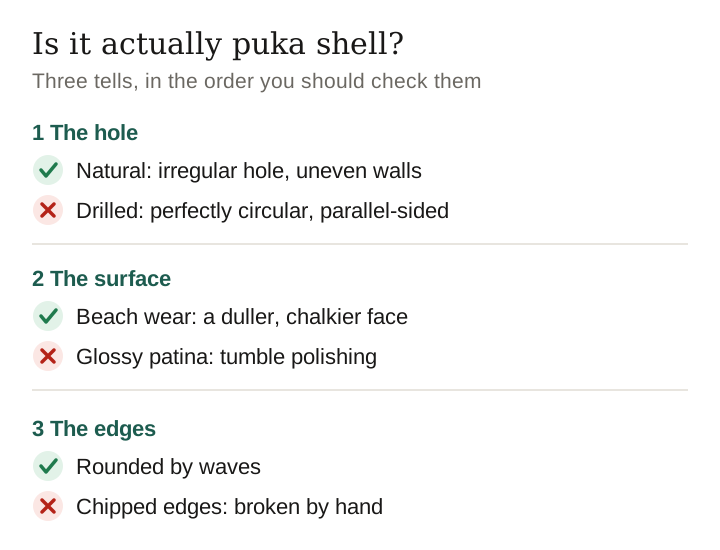
Three tells, in the order you should check them
- The hole. A natural puka is worn open by the sea, so the hole is irregular and its walls are uneven. A perfectly circular, parallel-sided hole indicates human drilling.
- The surface. A glossy patina indicates tumble polishing, which is an artificial finish. Natural beach wear leaves a duller, chalkier face.
- The edges. Chipped edges suggest the piece was broken by hand rather than rounded by waves. Cone-shell fragments worked with pliers and then tumbled are common and are still sold as puka.
Run those three checks across the listings on any marketplace and the result is uncomfortable: the overwhelming majority of listings show flat, even, disc-shaped chips with clean central holes. Those are cut shell beads. They may be perfectly nice necklaces. They are not what the word means.
Even, flat, tumbled chips are the modern default. This is the editorial call we will sign — if you want an actual puka shell necklace rather than a shell-chip necklace, you have to buy on the hole, and you will be buying from perhaps one listing in twenty.
Does "vintage" or "Hawaiian" move the price?
| How the listing describes it | Listings priced | Cheapest | Median ask | Dearest |
|---|---|---|---|---|
| Any puka shell listing | 1,629 | $2.41 | $20.00 | $399.00 |
| Title says vintage | 543 | $5.00 | $22.00 | $399.00 |
"Vintage" carries a 10% premium at the median — $22.00 against $20.00 — on a word that no listing supports with evidence. 1,011 of 1,629 priced listings ask under $25.00, so this remains an inexpensive category whichever way you buy it.
Why the necklace exists at all
- Puka shell necklaces became popular in the United States during the tourism boom of the 1960s, after Hawaii's admission to the union.
- Demand returned in the 1990s, starting with Californians and surf culture — which is the wave most of today's resale stock dates from, if it dates from anywhere.
- The natural supply was never large, which is precisely why substitutes took over the name.
Last verified 10 September 2026 against 1,629 priced puka shell listings from 12 US advertisers, matched inside a 3,000-row CJ product-feed pull. That is a deeper read than the 248-listing pull of 1 September, so the two counts are not comparable; the medians are, and this one holds at $20.00 across the last three read depths. Peer-to-peer asks of $500 or more are excluded as placeholders.
Frequently asked about puka shell necklaces
What is a puka shell actually made of?
A genuine puka bead is the beach-worn apex of a cone snail shell. Waves and coral rubble roll the empty shell until a hole forms through it naturally; puka is the Hawaiian word for that hole.
Are most puka shell necklaces real?
No. The majority of contemporary puka shell necklaces are made from other shells, or from plastic. Some use cone shell that has been worked with pliers and tumble-finished rather than shaped by the sea.
How can I tell a real puka shell from a fake?
Check the hole, the shine and the edges. A perfectly circular, parallel-sided hole means drilling. A glossy patina means tumble polishing. Chipped edges mean the piece was broken by hand. Natural pukas are irregular in all three respects.
What is a puka shell necklace worth?
$20.00 at the median across 1,629 live US listings on 10 September 2026, with 1,011 of them asking under $25.00. Listings using the word "vintage" ask a median of $22.00.
Sources
- Wikipedia, Puka shell — the cone-snail apex origin, the Hawaiian meaning of puka, the 1960s tourism-boom popularity and the 1990s surf-culture revival, the fact that most contemporary necklaces are other shells or plastic, and the three authenticity tells (drilled hole, tumble gloss, chipped edges).
- CJ Affiliate product feeds, US advertisers, queried 1 September 2026 — all price figures.
How this page was made. Drafted with AI (Claude); not yet independently re-checked. How we work