Price desk · Kitchen & glassware
What does Blue Willow china cost?
A $31.99 median hides a market with one dominant seller, a $4.99-to-$939 range, and a pattern that has been in continuous production for about 230 years.
Some links here are affiliate links — if you buy, the retailer may pay us a commission at no extra cost to you. We have earned $0 from them so far. Here’s how it works.
The median live Blue Willow listing was $31.99 on 2 September 2026, with the middle half between $18.99 and $69.95 and a full range of $4.99 to $939.95. That is 340 de-duplicated US listings.
The number that should shape your buying more than the median: 327 of those 340 listings — 96% — came from a single replacement-china specialist. This is not a competitive market with a going rate. It is one deep catalogue, plus a few decorative plates elsewhere.
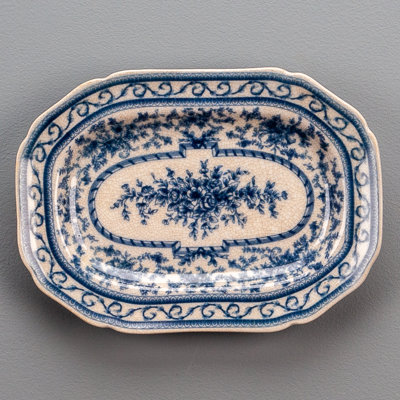
The price distribution
| Measure | Live figure |
|---|---|
| Listings measured | 340 de-duplicated, US-priced |
| Median | $31.99 |
| Middle half | $18.99 – $69.95 |
| Cheapest | $4.99 |
| Dearest | $939.95 |
| Distinct US retailers | 6 |
| Share from one specialist | 96% |
CJ product API, US advertisers, in-stock filter, 2 September 2026, titles filtered to willow-pattern tableware. Prices checked 2 September 2026
A 188-fold spread between cheapest and dearest is normal for replacement china and tells you almost nothing on its own. The useful reading is the middle half: most individual Blue Willow pieces trade between $19 and $70, and anything materially outside that band is either a serving piece, a full set, or an unusual maker.
Why one seller holding 96% matters
In most categories we measure, a median comes from a dozen retailers competing. Here it comes from one specialist catalogue. Three consequences, in order of how much they will cost you:
- There is no comparison price. If the specialist lists a saucer at $14.99, that is not a market rate you can check against a rival; it is a price. Treat our median as “what this catalogue charges”, not “what Blue Willow is worth”.
- Availability is per-piece, not per-pattern. Replacement catalogues stock individual pieces by maker and backstamp. The saucer you need may exist while the cup does not.
- The alternative sources are a different product. The non-specialist listings we found were decorative wall plates at $140 to $282 and printed textiles — not tableware you would set a table with.
Keep reading
What you are actually buying
Willow pattern is a chinoiserie design — pavilion, willow, bridge, two birds — that emerged in the 1780s and 1790s in the English Staffordshire potteries. Our reference credits engravers including Thomas Turner and Thomas Minton at the Caughley factory, and notes it was probably for Spode that the English willow pattern was created, perhaps around 1790.
The critical fact for a buyer: it was never one company’s design. Multiple Staffordshire factories produced it by transfer printing from about 1790, and it has remained in production in various forms to the present day. “Blue Willow” is a pattern name, not a maker, which is exactly why the specialist catalogue lists it under dozens of manufacturer headings.
The story on the plate — a mandarin’s daughter, a humble accountant, a flight with the duke’s jewels, and two lovers transformed into doves — is an English invention that grew up around an English design. It is a good story and it is not Chinese folklore.
How to buy without overpaying
- Match the backstamp, not the picture. Because dozens of makers produced the pattern, two plates that look identical online can differ in size and shade. Replacement catalogues index by maker for this reason.
- Expect to pay in the $19–$70 band per piece. Below that you are usually looking at a saucer or a small side plate; above it, a serving piece.
- Do not read the top of the range as an investment signal. One $939.95 listing in 340 is an outlier, not a market.
Frequently asked
How much is Blue Willow china worth?
The median live US listing was $31.99 on 2 September 2026, with the middle half between $18.99 and $69.95. That is an asking price in a market dominated by one specialist seller, not an appraisal.
Is Blue Willow still made?
Yes. Our reference records the pattern remaining in production in various forms to the present day, and it has been produced by many makers since about 1790.
Who made Blue Willow china?
Many companies. It emerged in the Staffordshire potteries in the 1780s and 1790s, with Thomas Turner and Thomas Minton at Caughley among the engravers named, and it was probably created for Spode around 1790.
Why is it so hard to compare Blue Willow prices?
Because 96% of the live US listings we measured came from one replacement-china specialist. There is very little competing supply to price against.
Sources and scope
- Pattern origin, engravers, makers, the story and continued production: Willow pattern, Wikipedia, read 2 September 2026.
- Prices, counts and retailer concentration: CJ product API, US advertisers, in-stock filter, pulled 2 September 2026; 400 raw rows filtered to 340 willow-pattern tableware listings, with jewellery, fabric and books removed.
- Images on this page come from general retailers rather than the specialist catalogue, because that catalogue’s image host refuses ordinary browser requests. Its prices are quoted; its photographs are not used.
- We have not handled or tested any piece described here.
Last verified 2 September 2026 against live US retailer listings pulled during this run and the published pattern history
Keep reading
How this guide was made. We research and draft these guides with AI, then a person checks every price, link and factual claim against the source before it publishes. We work this way because it lets us re-verify prices across hundreds of guides in a day, which is what keeps the numbers here current; it does not decide what we recommend. Anything we could not verify is labelled as unverified rather than filled in.