LinkToLooks · Guides · Creator Desk
Creator Desk
What should you charge, and how do you defend the number?
Part of: The business of being a creatorFor creators
There is no market rate we can honestly quote you. What we can do is show you how a defensible number is built — production, distribution, usage rights and exclusivity priced separately — and what happens in a negotiation when they are not.
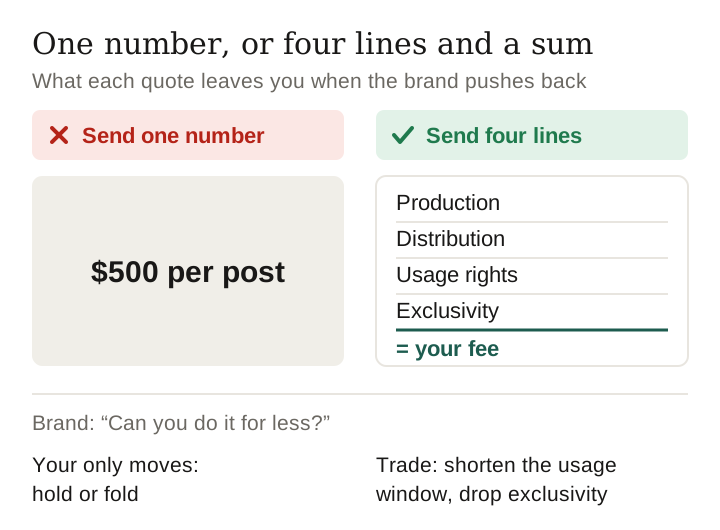
A creator who can break a fee into four components can defend it. A creator who sends one number can only repeat it or drop it.
Why one number is the weakest thing you can send
Send "$500 per post" and you have handed the other side a single value to push against. Every reply is a variation of "can you do it for less", and your only moves are to hold or fold. Worse, one number silently bundles things that should be priced apart, which is how creators end up granting a brand permanent advertising rights to a video they were paid a posting fee for.
Break the number up and the conversation changes shape. "Can you reduce it?" becomes a question with a real answer: yes, if we shorten the usage window or drop the exclusivity clause. That is a negotiation you can win something in. The single number is one you can only lose in.
The four components of a defensible fee

Production
- Your time: concept, shooting, editing, and the revision rounds you agree to.
- Anything you buy or hire for it.
- State the number of revisions included. Unlimited revisions is how a fixed fee becomes an hourly rate approaching zero.
Distribution
- Publishing it to the audience you built, and leaving it up for an agreed period.
- This is the part your audience data justifies, which is why the media kit numbers matter here.
Usage rights
- Where else the brand may use the asset: their own channels, paid advertising, email, in-store, print.
- For how long, and in which territories.
- Paid advertising is the expensive one. A brand running your face as an ad is buying something categorically different from a post on your feed.
Exclusivity
- Which competing categories you agree not to work with, and for how long.
- This is pure opportunity cost: you are selling work you have not been offered yet. Price it by the breadth of the category and the length of the window, and refuse open-ended ones.
Keep reading →
The pricing methods, and how each one fails

Flat fee per post
- Simple, and the easiest to say out loud.
- Fails when scope grows after you quote. The fix is to write what the fee covers next to the fee itself, in the same message.
Per-thousand, priced on reach
- Ties the fee to something the brand recognises from its other media buying.
- Fails because reach is unverifiable from outside. A sceptical buyer discounts any number they cannot check, and reach is visible only in your analytics.
Per deliverable
- Clear, itemised, and easy to add to or remove from.
- Fails when usage rights ride along for free. Itemising assets while leaving rights unpriced is the most common expensive mistake in this list.
Performance only
- Attractive to a brand because their risk is zero.
- Fails because you carry all of it. You fund production, and you are paid only if their landing page, pricing, stock and checkout all work. None of those are yours to fix.
What usage rights and exclusivity actually cost
We cannot give you a multiplier, because a credible one would have to come from contract data we do not have. What we can give you is the structure of the question, which is what actually protects you:
| Ask | Why it changes the number |
|---|---|
| Which channels? | Their organic feed is close to what you already do. Paid advertising is not. |
| For how long? | An open-ended grant is worth vastly more than a three-month one, so it should never be free. |
| Which territories? | Global is not the same product as one market. |
| Whitelisting or ad accounts? | Running ads from your handle uses your identity, not just your content. |
| Exclusivity: which categories? | Broad category definitions can quietly block most of your possible work. |
| Exclusivity: how long? | The window is the price. Refuse indefinite ones. |
If a brief does not state these, the answer is not to guess. It is to ask, in writing, before quoting. A brand that will not specify its usage terms is asking you to price an unknown.
The affiliate alternative
If you are weighing a sponsored fee against monetising the same content with affiliate links, the affiliate side is bounded by order value, and order value is public.
The reason this belongs on a rate-card page: it sets a floor for what a sponsored fee has to beat. If a brand offers you a fee below what you would plausibly earn linking the same product to the same audience, the offer is worse than doing nothing for them. Most creators have never done that comparison, and it is a genuinely strong thing to have in your head during a negotiation.
Being honest about the other direction too: affiliate income requires completed purchases, and at a low order value with a mid-single-digit rate it takes a great many sales to reach a four-figure sum. A sponsored fee is paid whether anyone buys or not. That certainty is worth real money and should not be argued away.
How to defend a number in the reply
- Send the components, not the total alone. Four lines and a sum. The itemisation is the argument.
- Name what is included and what is not in the same message, especially revision count and usage window.
- When asked to reduce it, trade rather than discount. Shorten the usage window, narrow the exclusivity, drop a deliverable. A lower number for the same rights teaches them the first number was invented.
- Put a date on the quote. It stops a fee agreed in one quarter being applied to work in the next.
- Be willing to say no. The strongest position in any negotiation is a real alternative, which is the other reason to know your affiliate arithmetic.
What we will not tell you
Last verified 9 September 2026. No platform-specific features are described here, so nothing in this page expires when an app changes.
Frequently asked about creator rates
How much should a creator charge per post?
We will not quote a market rate, because we have no verified data for one. Build the number instead: production, distribution, usage rights and exclusivity priced separately, then summed. That is a number you can defend line by line.
What is the biggest pricing mistake creators make?
Giving usage rights away inside a posting fee. A brand running your content as paid advertising is buying something categorically different from a post on your feed, and it should be priced separately.
Should you take a performance-only deal?
Only with your eyes open. You fund production and are paid only if the brand's landing page, pricing, stock and checkout all work, and none of those are yours to fix. The brand's risk is zero; yours is the whole cost.
How do you respond when a brand asks you to lower your rate?
Trade instead of discounting. Shorten the usage window, narrow the exclusivity, or remove a deliverable. Cutting the number while keeping the same rights teaches them the first number was not real.
Is affiliate income better than a sponsored fee?
Different risk. A fee is paid whether anyone buys or not; affiliate income needs completed purchases, and at a low order value it takes many sales to reach four figures. Knowing your affiliate arithmetic is what lets you judge a fee.
Nothing on this page is drawn from a creator we work with, because there are none. Where we have no evidence we say so instead of filling the gap.
Keep going →
How this page was made. Drafted with AI (Claude); not yet independently re-checked. How we work