Answers · Knitwear
Is cashmere warmer than merino wool?
The fibre answer is the easy half. The half that decides what you actually get is missing from every listing we checked.
Some links here are affiliate links — if you buy, the retailer may pay us a commission at no extra cost to you. We have earned $0 from them so far. Here’s how it works.
Gram for gram, cashmere is the warmer fibre. In practice the garment usually decides, and the listing will not tell you. We checked 784 live US knitwear listings on 3 September 2026 for the two specifications that actually govern warmth — fabric weight and knit gauge. Neither appeared in a single one.
So the useful version of the answer is not about fibres at all. A heavy merino jumper is warmer than a thin cashmere one, every time, and the fibre name on the label is doing work it cannot do.
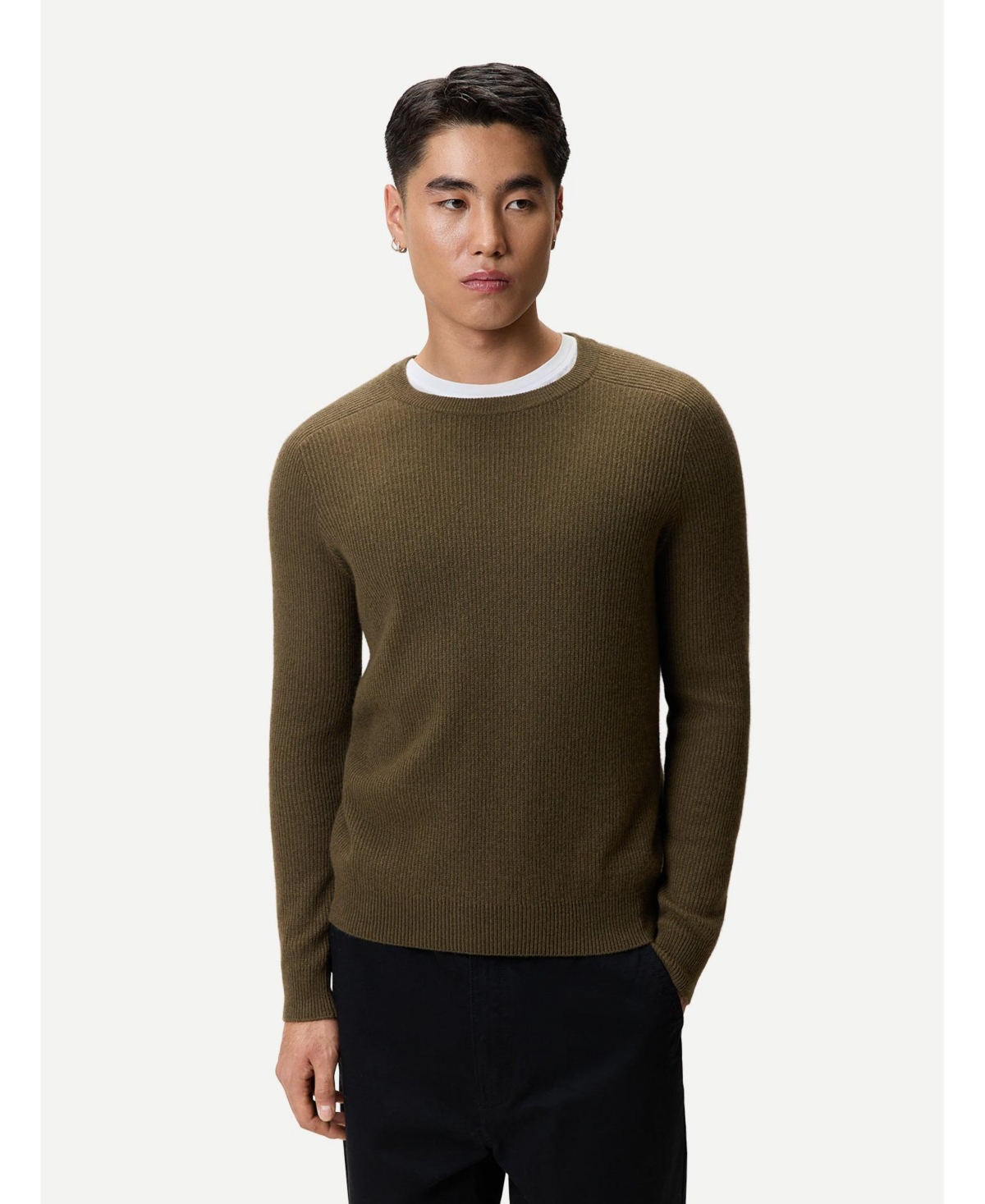
What is actually established about the two fibres
The consensus in the trade, which we are reporting rather than testing, runs like this:
- Cashmere is a finer, softer fibre with high loft, so it insulates well for its weight. It is also weaker, pills more readily and wears through faster at friction points.
- Merino is a stronger fibre with better moisture handling and abrasion resistance. It holds up to repeated wearing and washing in a way cashmere does not.
- Both insulate by trapping air, which is why construction matters as much as material.
- Neither is warm in the abstract. Warmth is a property of a garment, not of a fibre.
What the listings do not say
This is our own contribution to the question, and it is the part we can stand behind entirely. We read the title and description of every cashmere and merino knitwear listing we could reach and counted what each one disclosed.
| Specification | Cashmere listings | Merino listings |
|---|---|---|
| Total checked | 420 | 364 |
| Fabric weight (gsm or oz) | 0 (0%) | 0 (0%) |
| Knit gauge | 0 (0%) | 0 (0%) |
| Ply | 9 (2.1%) | 0 (0%) |
| Fibre blend percentage | 246 (58.6%) | 105 (28.8%) |
| No specification of any kind | 173 (41.2%) | 259 (71.2%) |
784 live US in-stock knitwear listings, 3 September 2026.
Prices checked 3 September 2026 against live US retailer listings pulled during this run.
Zero out of 784. Not a low number — none. The two figures a buyer would need to answer ‘which of these is warmer’ are absent from the entire sample, in both materials, at every price.
And merino listings are the quieter of the two: seven in ten said nothing about composition at all, against four in ten for cashmere. That is probably because merino is often sold as a technical layer where the brand carries the claim, but the effect on a buyer comparing two listings is the same.
Keep identifying
What actually decides how warm a jumper is
- Fabric weight. Grams per square metre, or the garment's weight in ounces. The single most predictive number, and the one nobody publishes.
- Knit gauge. How tightly the fabric is knitted. A loose open knit in either fibre is a spring jumper.
- Ply. How many yarn strands are twisted together. Two-ply is warmer than single-ply at the same gauge. Stated on 9 of 784 listings.
- Blend. A 30% cashmere blend behaves like the other 70%. Stated on well under two-thirds of listings.
- Fit and coverage. A high neck and a close cuff do more for warmth than a fibre upgrade, and cost nothing.
Which converts into one question worth asking a seller: ‘what does it weigh, and what is it made of?’ If they can answer both, you can compare two garments properly. If they can answer neither, the fibre name is all you have, and now you know how little that is.
What each one costs
| Cashmere knitwear | Merino knitwear | |
|---|---|---|
| Listings | 554 | 554 |
| Median | $80.00 | $35.00 |
| Lower quartile | $45.00 | $24.00 |
| Upper quartile | $165.00 | $50.00 |
| Cheapest | $16.00 | $7.00 |
| Dearest | $1,960.00 | $354.00 |
Live US in-stock listings, 3 September 2026. Merino rows exclude rugs, throws and blankets, which the keyword match otherwise returns.
Cashmere costs a little over twice as much at the median and runs five times higher at the top. If warmth per dollar is the question rather than warmth per gram, that ratio is the answer, and it points at merino for anything you intend to wear hard.
Frequently asked
Is cashmere warmer than merino wool?
For the same garment weight, cashmere is generally the warmer fibre and merino the better one at handling moisture and abrasion. But weight and knit decide far more than fibre does, and not one of the 784 live knitwear listings we checked stated either.
Which is better, cashmere or merino?
They are built for different jobs. Merino is the practical choice for layers you will wear hard and wash often; cashmere is the softer, lighter, more fragile one. Price separates them sharply: an $80 median against $35 in the same catalogue today.
Why is merino cheaper than cashmere?
Supply. Merino comes from sheep in commercial quantities; cashmere is combed from goats in far smaller volumes. In our pull merino knitwear ran a $35.00 median against $80.00 for cashmere.
How do I know how warm a sweater is before buying?
Ask for the fabric weight or the knit gauge. Neither appeared in any of the 784 listings we checked, so you will have to ask, and the answer tells you more than the fibre name does.
Method and scope
- 784 live US in-stock knitwear listings — 420 cashmere, 364 merino — pulled 3 September 2026 and searched, title and description together, for weight, gauge, ply and blend-percentage language.
- Price rows: 554 cashmere knitwear listings and 554 merino apparel listings from the same morning's pulls. Merino rows exclude homeware, which a keyword match on the fibre otherwise returns in quantity.
- The fibre comparison in the first section is trade consensus, reported as such. We have run no thermal test, worn nothing, and handled nothing.
- Prices are live asking prices at the moment of the pull.
Last verified 3 September 2026 against 784 live US cashmere and merino knitwear listings checked for weight, gauge, ply and blend disclosure during this run
Keep identifying
How this guide was made. We research and draft these guides with AI, then a person checks every price, link and factual claim against the source before it publishes. We work this way because it lets us re-verify prices across hundreds of guides in a day, which is what keeps the numbers here current; it does not decide what we recommend. Anything we could not verify is labelled as unverified rather than filled in.