LinkToLooks · Guides · Reference Desk
Reference Desk
What is written in a record's dead wax?
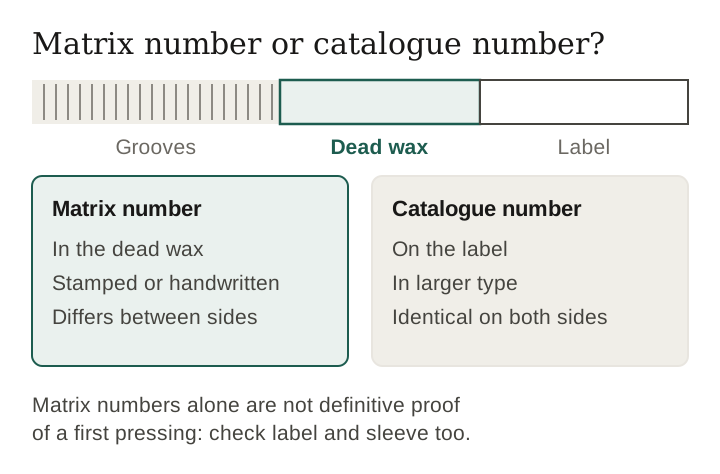
The dead wax is the smooth band between the last groove and the label. On almost every record ever pressed there is writing in it. That writing is the matrix number, and it is the closest thing a record has to a serial number — which is why every argument about whether a copy is an original pressing ends up there.
This guide explains what is actually in that band, what it can prove, and the very real limits on what it can prove.
What a matrix number is
A matrix number is an alphanumeric code — sometimes with other symbols — stamped or handwritten, or both, into the run-out groove area of a record. That area has several names in collector usage: dead wax, run-off groove, end-groove.
The critical distinction, and the one most often got wrong: a matrix number is not a catalogue number. The catalogue number is identical on both sides of a record and appears in larger type on the label. Matrix numbers differ between sides. If the code you are reading is the same on both faces, you are reading the catalogue number and you have not looked at the dead wax yet.
What is encoded in the band
| Element | What it is | What a collector does with it |
|---|---|---|
| Main number | Usually also printed on the label; identifies the stamper | Ties the disc to a specific production line |
| Cut or take suffix | A number appended to the main code — 12345–3 means the third cut | Distinguishes recuts and remasters of the same title |
| Plant code | A mark identifying the pressing plant | Narrows down where and often roughly when the disc was pressed |
| Engineer initials or signature | Cutting engineers sign their work | Identifies a mastering lineage, and sometimes a prized one |
| Copyright date | Where present | A hard latest-possible date for the pressing |
| Inscriptions | Hidden messages engineers deliberately inscribed | No bearing on value, but half the fun of looking |
What matrix numbers can and cannot settle
Collectors use them to identify editions and pressings, to work out approximate recording dates and studios, to spot alternate takes or different mixes between pressings, and to argue about first pressings. That last one comes with a caveat that deserves to be in bold: matrix numbers alone are not definitive proof of a first pressing. They are strong evidence in combination with label design, sleeve variations and plant history. On their own they are an argument, not a verdict.
Retail packshots show the run-out band clearly enough to see that writing exists and nowhere near clearly enough to read it. That is the normal state of affairs online, and it is the single practical reason dead-wax verification is so often skipped: nobody photographs it, and you cannot ask a retailer to.
Reading the dead wax, in order
- Get raking light. Stamped codes are shallow. A lamp low and to one side makes them legible in a way overhead light never will.
- Read both sides. The codes differ, and the difference is the point.
- Separate stamped from handwritten. Machine-stamped and hand-etched marks are made at different stages and by different people.
- Find the suffix. The cut or take number after the main code is what distinguishes pressings of the same title.
- Do not stop there. Cross-check the label design and the sleeve before calling anything a first pressing.
Where this matters on today's market
It matters less than you might think, because most of what is on sale new is not a pressing anyone needs to date. Of 481 priced LP listings from US retailers on 1 September 2026, 11 carry "reissue", "remaster" or "anniversary" in the title and 247 name coloured vinyl or a picture disc. Those are current manufacture, sold as current manufacture. The dead wax on a 2026 reissue will tell you it is a 2026 reissue.
Our judgement: dead-wax reading is a skill for buying used records in person, and almost useless for buying new ones online. Learn it before a record fair, not before a checkout page.
Last verified 1 September 2026. Matrix-number facts are sourced to Wikipedia as cited below. Market figures are computed from 481 priced LP listings from US advertisers in the CJ product feed on the same date.
Frequently asked about dead wax and matrix numbers
What is the dead wax on a record?
The smooth run-out area between the final groove and the label, also called the run-off groove or end-groove area. It is where matrix numbers are stamped or handwritten.
What is a matrix number?
An alphanumeric code, sometimes with other symbols, stamped or handwritten into the run-out groove area. It can encode the stamper identity, a cut or take suffix, a pressing plant code, cutting engineer initials and a copyright date.
Is a matrix number the same as a catalogue number?
No. Catalogue numbers are identical on both sides of a record and appear in larger type on the label. Matrix numbers differ between sides.
Can a matrix number prove a first pressing?
Not on its own. Collectors use matrix numbers to authenticate first pressings, but the numbers alone are not definitive proof. They need to be read alongside label design, sleeve variants and pressing-plant history.
Sources
- Wikipedia, Matrix number — the definition as an alphanumeric code stamped or handwritten into the run-out groove area (dead wax); the stamper identity, cut or take suffix, plant codes, cutting engineer initials and copyright dates it can carry; the deliberate inscriptions; the distinction from catalogue numbers, which are identical on both sides and set in larger type on the label; and the caution that matrix numbers alone are not definitive proof of a first pressing.
- CJ Affiliate product feeds, US advertisers, queried 1 September 2026 — all market figures.
How this page was made. Drafted with AI (Claude); not yet independently re-checked. How we work