LinkToLooks · Guides · Reference Desk
Reference Desk
What does bar pressure mean on an espresso machine?
The number on the box answers a question about the pump. The number that matters is one almost nobody prints.
A bar is a unit of pressure, and the number on the box is the pump's maximum, not the pressure your coffee is brewed at. Espresso is conventionally brewed at about 9 bar at the coffee. A pump rated at 15 or 20 bar is regulated down to something near that in use.
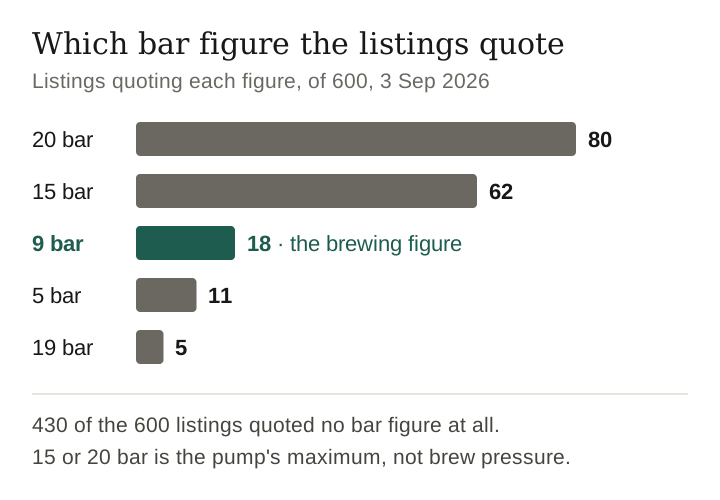
We counted how the market talks about it. Of 600 live US espresso machine listings on 3 September 2026, 430 quoted no bar figure at all. Of those that did, 20 bar and 15 bar accounted for 142 listings and the actual brewing figure of 9 bar for 18.
What a bar is
- A bar is a unit of pressure. One bar is very close to atmospheric pressure at sea level, and about 14.5 pounds per square inch.
- Nine bar is the long-standing convention for brewing espresso: roughly nine times atmospheric pressure, applied to hot water forced through compacted coffee.
- A pump rating is the maximum a pump can generate with nothing in its way. It is a component specification, in the same way a car's top speed is not the speed limit.
- Brew pressure is what reaches the coffee, after regulation and after the resistance of the coffee bed itself. This is the figure that matters and the one almost nobody advertises.
So the two numbers answer different questions. ‘20 bar’ answers ‘what can this pump do’. ‘9 bar’ answers ‘what is happening to the coffee’. Marketing has standardised on the first one.
What the listings actually claim
Rather than assert that the market over-advertises the pump figure, we counted it. Every live espresso listing we could reach was searched for a bar figure, in the title and in the description.
| Where the figure appeared | Listings |
|---|---|
| In the product title | 49 |
| In the description only | 162 |
| Nowhere at all | 430 |
| Total listings checked | 600 |
600 live US in-stock espresso machine listings, 3 September 2026.
| Figure quoted | Listings quoting it |
|---|---|
| 20 bar | 80 |
| 15 bar | 62 |
| 9 bar | 18 |
| 5 bar | 11 |
| 19 bar | 5 |
Same sample. A listing quoting more than one figure is counted under each.
Prices checked 3 September 2026 against live US retailer listings pulled.
Two things fall out of that. First, seven listings in ten do not mention pressure at all, at every price point, which is the strongest available evidence that the industry does not treat it as a headline specification even while some marketing does.
Second, the distribution of figures is upside down relative to what brewing requires. The two numbers nothing is brewed at — 15 and 20 bar — appear nearly eight times as often as the number espresso is actually made at.
Why the number is not a ranking
- Higher is not better past a point. Once a pump can comfortably exceed brewing pressure, more headroom changes nothing about the cup.
- Regulation is the real variable. Whether and how a machine holds pressure steady matters more than its ceiling, and it is rarely stated.
- The grind and the dose matter more than either. Resistance at the coffee bed is what actually sets brewing pressure, which is why grinders are discussed as seriously as machines.
- Capsule and stovetop products quote it too, where it means something different again. Our sample's 5 bar listings were largely not pump espresso machines.
The practical rule: treat a bar figure as a filter you can ignore, not a specification you can compare. If two machines differ only in that one says 15 and one says 20, you have learned nothing about either.
Frequently asked
What does bar pressure mean on an espresso machine?
A bar is a unit of pressure, roughly the air pressure at sea level. On a machine's box it almost always describes the pump's maximum output, not the pressure the coffee is brewed at.
Is 15 bar better than 9 bar?
No. Espresso is conventionally brewed at around 9 bar at the coffee itself. A 15 or 20 bar pump is not brewing at 15 or 20 bar; it is a specification of the pump, regulated down in use.
What is 20 bar on a coffee machine?
A pump rating. It was the most advertised figure in our pull, appearing in 80 of the 170 listings that quoted any number at all.
Do I need a high bar rating?
The number is not a quality ranking. Of 600 live espresso listings we checked, 430 quoted no bar figure whatsoever, including machines at every price in the category.
What pressure is espresso actually brewed at?
Around 9 bar is the long-standing convention. Only 18 of the 600 listings we checked mentioned that figure, against 142 quoting 15 or 20.
Method and scope
- 600 live US in-stock espresso machine listings, pulled 3 September 2026, each searched for a bar figure in its title and its description.
- Where a listing quoted more than one figure, it is counted under each figure, so the figure column sums to more than the number of listings quoting any.
- The 9 bar brewing convention and the definition of a bar are stated as long-established background, not as our measurement.
- We have not measured pressure on any machine, and no model is assessed on this page.
Last verified 3 September 2026 against 600 live US espresso machine listings checked for a quoted bar figure
How this page was made. Drafted with AI (Claude); not yet independently re-checked. How we work