Creator economy · Niche guides
Which affiliate programmes actually fit a food creator?
Food creators make content about food and earn from hardware, because affiliate catalogues are built from shippable goods and almost nothing you eat qualifies. Four equipment subcategories, priced today.
Some links here are affiliate links — if you buy, the retailer may pay us a commission at no extra cost to you. We have earned $0 from them so far. Here’s how it works.
Part of: For creators
The monetisable half of a food creator’s content is the equipment, not the food. Measured on live US listings on 2 September 2026: cookware returned 172 listings across 16 retailers at a $79.95 median, small appliances 159 listings across 22 retailers at $79.00, and bakeware 133 listings across 15 at $49.99. A coffee-gear filter matched three listings and a median is not published for it. Groceries are effectively absent.
The inversion at the centre of food content
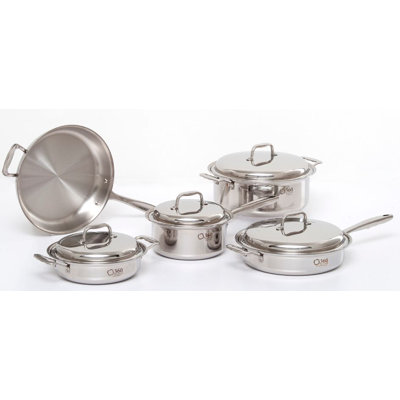
Food creators make content about food and earn from hardware. That sounds like a cynical observation and it is really an inventory one: affiliate catalogues are built from shippable, non-perishable retail goods, and almost nothing you eat qualifies. The pan does.
Once you accept the inversion, a lot of the standard advice stops making sense. Building a whole content strategy around ingredient links is building on a catalogue that does not exist. Building around the equipment already in the frame costs nothing extra and is where the depth is.
Four subcategories, pulled live
| Subcategory | Listings matched | Median | Middle half | Distinct retailers |
|---|---|---|---|---|
| Cookware | 172 | $79.95 | $35.00 – $174.99 | 16 |
| Small appliances | 159 | $79.00 | $25.99 – $290.00 | 22 |
| Bakeware | 133 | $49.99 | $27.99 – $132.99 | 15 |
| Knives | 33 | $36.10 | $19.94 – $119.95 | 5 |
Method: CJ product API, US advertisers, five food seed terms pulled during this run on 2 September 2026, de-duplicated by link and title into a pool of 705 rows, then filtered to titles naming the product type. A demo advertiser account present in the catalogue was excluded.
Small appliances have the widest retailer choice of any food subcategory we measured, and much the widest price spread: a middle half from $25.99 to $290.00 means the same subcategory contains a hand blender and a stand mixer. That is useful rather than messy, as long as one post does not try to serve both.
What each subcategory is actually good for
Cookware
- 172 listings, 16 retailers, $79.95 median, middle half $35.00 to $174.99.
- The strongest combination in food of order value and programme choice.
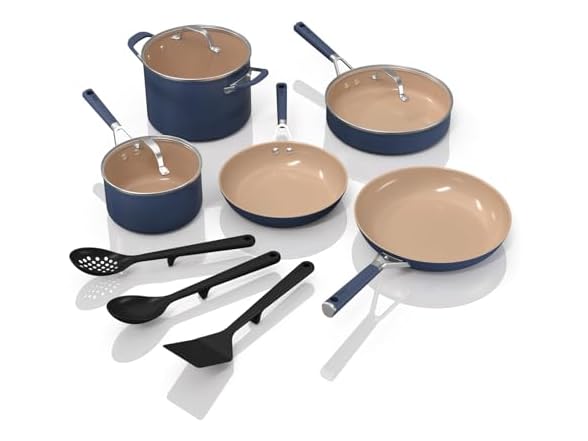
- Sets outsell singles in these feeds, which suits a creator: a set is one link that covers a whole video.
Small kitchen appliances
- 159 listings, 22 retailers — the widest programme choice in the niche — and a $79.00 median.
- The $25.99 to $290.00 middle half is the spread to plan around: pick a price band per post and stay in it.
- Appliances are the most searched-for equipment in food content and the most seasonal, which makes them the natural Q4 slot.
Bakeware
- 133 listings, 15 retailers, $49.99 median.
- The least discounted subcategory in food: only 7 of 133 carried a sale price, so the base your rate multiplies against is usually the list price.
- Glass bakeware in particular is a durable-search product — people look for it by dimension and pattern years after the post goes up.
Knives
- Only 33 matched listings across 5 retailers, median $36.10.
- The middle half runs $19.94 to $119.95, which is wide for so few rows and means the median is indicative rather than firm.
- A thin subcategory in a deep niche: worth a link when a knife is genuinely the subject, not worth a programme application on its own.
Keep reading
What discounting does to the base
A separate cookware-only pull on the same date gives the cleanest number we have on this: 23 of 165 cookware listings carried a sale price below list, at a median discount of 27.6% and a maximum of 63.3%. Roughly one listing in seven, and when it happens it is not a token cut.
Commission normally follows the price the buyer pays. So on a $79.95 median cookware set discounted at the median 27.6%, the base falls to $57.87 and every commission rate applied to it falls with it, by more than a quarter, without any rate changing.
Last verified 2 September 2026 against live CJ product-feed pulls of five food seed terms and one cookware-only pull taken during this run, filtered by product type and de-duplicated by link and title
Some links here are affiliate links. LinkToLooks has earned $0 from them to date — no network has approved us yet — so nothing on this page is picked to hit a payout.
Where the catalogue has nothing

Applying, in order
- One broad home-and-kitchen retailer first. It will cover cookware, bakeware and appliances in a single approval, which is the cheapest possible coverage of the niche.
- One deal or clearance retailer second, for the appliance posts where price is the story.
- Brand-direct programmes last, and only for the two or three brands that actually recur in your videos.
- Skip the ingredient programmes until you can see stock in them. An approval you cannot link from is admin, not income.
Frequently asked
What should a food creator link to?
Equipment, on the numbers. In a live US pull on 2 September 2026, cookware returned 172 listings across 16 retailers at a $79.95 median and small appliances 159 listings across 22 retailers at $79.00. The food itself barely appears in these catalogues.
Why is there so little actual food in affiliate feeds?
Groceries are low-margin, perishable and mostly sold locally, so they are poorly represented in product feeds built for shippable retail goods. Our coffee-gear filter matched three listings, which is too few to publish a median for.
Which food subcategory has the widest programme choice?
Small kitchen appliances, at 22 distinct US retailers in our pull. Cookware was second at 16 and bakeware third at 15.
How much does discounting cut a cookware commission?
In a separate cookware-only pull on the same date, 23 of 165 listings carried a sale price, with a median discount of 27.6% and a maximum of 63.3%. Commission usually follows the price paid, not the list price.
Do recipe posts convert worse than equipment posts?
We publish no conversion data because we have none. Structurally, a recipe post has one advantage nothing else in food has: the equipment is already on camera and needs no separate pitch.
Sources and scope
- All counts, medians, quartiles, retailer counts and discount figures: CJ product API, US advertisers, pulled 2 September 2026 during this run.
- Sample: 705 de-duplicated rows across five food seed terms filtered to 497 rows naming the product type, plus a separate 165-row cookware pull used for the discount measurement.
- No commission rate, conversion rate or earnings figure is asserted.
Keep reading
How this guide was made. We research and draft these guides with AI, then a person checks every price, link and factual claim against the source before it publishes. We work this way because it lets us re-verify prices across hundreds of guides in a day, which is what keeps the numbers here current; it does not decide what we recommend. Anything we could not verify is labelled as unverified rather than filled in.