LinkToLooks · Guides · Reference Desk
Reference Desk
Gold-filled or gold-plated? How to tell
Two pieces at the same price, the same colour and the same weight can differ by an order of magnitude in how long they stay gold.
Look for a fraction. Gold-filled jewellery is marked with one — 1/20 14K GF means one twentieth of the item's weight is 14-karat gold, bonded as a layer many times thicker than plating. Plated jewellery carries no fraction, because there is no defined minimum for it to state.
If the mark says GP, GEP, HGE or HGP, it is electroplated. If it says vermeil, it is gold over sterling silver. If it says gold-tone, there is no gold in it at all.
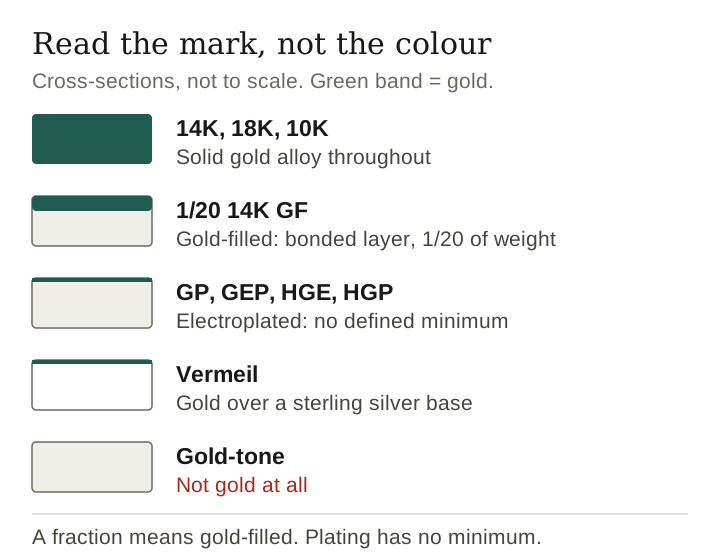
The marks, and what each one commits to
| Mark you will see | What it means | Rough gold content |
|---|---|---|
| 14K, 18K, 10K, 22K, 24K | Solid gold alloy throughout | 58%, 75%, 42%, 92%, 99% by definition |
| 1/20 14K GF | Gold-filled: a bonded layer, 1/20 of total weight | 5% of the item's weight is 14K gold |
| 1/20 12K GF | Gold-filled at a lower karat | 5% by weight, softer colour |
| 1/40 10K RGP | Rolled gold plate: thinner than gold-filled | 2.5% by weight |
| GP, GEP, HGE, HGP | Electroplated: a deposited layer | No defined minimum |
| Vermeil | Gold over a sterling silver base | Plating thickness varies by maker |
| Gold-tone, gold-coloured | Not gold | None |
Marks and definitions as described in the general reference literature on gold-filled jewellery. In the United States the governing document is the Federal Trade Commission's Jewelry Guides; check there before relying on a marking in a dispute.
The distinction that matters most sits between rows two and five. Gold-filled has a legal minimum proportion of gold by weight; plating does not. A gold-filled piece can carry a layer five to ten times thicker than ordinary plating, and reference sources put its life at ten to thirty years of daily wear before the gold wears through.
Terms like HGE, standing for heavy gold electroplate, sound as though they promise something specific. They tell you the piece is plated. They do not tell you how thickly.
What to do when there is no mark at all
Most of the time there will not be one, and this is the part we can put a number on. We checked the titles of 815 live US gold-jewellery listings — chains, hoops and signet rings — on 2 September 2026:
- 210 (25.8%) stated a karat.
- 86 (10.6%) used a plating or fill word: plated, filled, vermeil, gold-tone.
- 23 (2.8%) said sterling.
- Roughly two thirds said "gold" and stopped there.
So the practical tells, in the order we would use them:
- Price against weight. Solid gold is priced by the gram and cannot be cheap. A substantial-looking chain under about $80 is plated, whatever the listing implies.
- Look at the clasp and the jump rings. Plating wears through at friction points first, so a second-hand piece shows its truth at the clasp before anywhere else.
- Check the inside of a ring band and the back of an earring post. That is where marks are struck, and where wear appears first.
- Weigh it if you can. Gold is dense. A large piece that feels light for its size is hollow, plated, or both.
- Read the full product page, not the title. Many retailers do state the construction, three scrolls below the price.
How each one actually fails
- Electroplate wears through at contact points first — clasp, chain links that rub, the inside of a ring band. Once the base metal shows, replating is usually worth more than the piece.
- Vermeil fails the same way, but the metal underneath is sterling silver rather than brass, so a worn vermeil piece is still a silver piece.
- Gold-filled wears far more slowly because there is far more gold to wear through, and it can be polished. It is not solid gold and will eventually go the same way.
- Solid gold does not wear off; it scratches and it bends. Softer high-karat alloys mark more easily than 10K or 14K, which is a genuine argument against 22K for daily wear.
Our editorial judgment, for what it is worth: gold-filled is the most underrated category in this market and vermeil is the most overrated. Vermeil sounds like a construction and is often thinner than a well-made gold-filled piece at the same price; it wins because the word sounds like jewellery and "gold-filled" sounds like a compromise.
What this cannot settle
- We have not handled any of these pieces. Everything here is read from marks, listings and reference sources; we identify from photographs and data, we do not test metal.
- A mark can be wrong. Marks are struck by manufacturers, and an unmarked or mismarked piece is common in second-hand jewellery.
- Only an assay is definitive. Acid testing, XRF or a jeweller's assessment settles what a photograph cannot.
- The US rules are the FTC's Jewelry Guides. We link the general reference below; the regulation itself is the document that governs a dispute.
Reference: Gold-filled jewelry — Wikipedia, read 2 September 2026. US marking rules are set by the Federal Trade Commission's Jewelry Guides.
Frequently asked
What does 1/20 14K GF mean?
It is a gold-filled mark. One twentieth of the item's total weight is 14-karat gold, bonded as a layer far thicker than electroplating.
Is gold-filled better than gold-plated?
It carries a defined minimum of gold by weight where plating carries none, and reference sources put its life at ten to thirty years of daily wear. Plating has no comparable floor.
What does HGE mean on jewellery?
Heavy gold electroplate. It tells you the piece is plated. It does not commit the maker to any particular thickness.
What is vermeil?
Gold over a sterling silver base. When the gold wears through you are left with silver rather than brass, which is its real advantage.
How can I tell if there is no mark?
Judge by price against weight, check the clasp and jump rings for wear, and weigh the piece if you can. Only an acid or XRF test is definitive.
Method and scope
- Marks, definitions and durability ranges are drawn from general reference literature on gold-filled jewellery, cited in the body. US marking rules are set by the FTC's Jewelry Guides.
- The disclosure counts cover 815 live US gold-jewellery listings (chains, hoops and signet rings) pulled from CJ product feeds on 2 September 2026, searching listing titles only.
- A listing that does not state its metal in the title may state it further down the product page. The count measures what a shopper sees at the point of decision, not what the retailer knows.
- We have not handled, tested or assayed any piece. This page identifies from marks, listings and references.
- No price is asserted as evidence of composition; the price-against-weight tell is offered as a heuristic and labelled as one.
Last verified 2 September 2026 against 815 live US gold-jewellery listings checked for metal disclosure
How this page was made. Drafted with AI (Claude); not yet independently re-checked. How we work