Research desk · Data study
Half of retailers never publish a sale price
Sixty of 122 retailers in a 10,575-listing pull marked down nothing at all. Four marked down everything. Almost nobody sits in between.
Some links here are affiliate links — if you buy, the retailer may pay us a commission at no extra cost to you. We have earned $0 from them so far. Here’s how it works.
Part of: Research
Of 122 retailers in a 10,575-listing pull taken on 3 September 2026, 60 published a sale price on not one listing. Four published one on every listing they had. Method: 24 product keywords read at five catalogue depths through the CJ product API, de-duplicated on retailer, title and destination URL.
The practical consequence: whether a catalogue looks discounted is a decision the retailer's feed makes, not a fact about the market. Wayfair North America returned 2,498 listings and zero sale prices. Poshmark returned 1,681 and marked down 64% of them.
The finding, in one table
Every retailer below returned at least 25 listings in this pull. Share marked down is the percentage of that retailer's listings carrying a sale price genuinely below its own list price, with placeholder list prices ($999, $9,999, $777) excluded. Median cut is the middle discount among those. Median price is the middle price a shopper would pay.
| Retailer | Listings | Share marked down | Median cut | Median price |
|---|---|---|---|---|
| UnbeatableSale.com | 33 | 100.0% | 28.2% | $36.65 |
| Temu Europe | 64 | 100.0% | 37.2% | $29.86 |
| Qathu — K-Beauty Store | 56 | 100.0% | 16.5% | $112.00 |
| Factcool Europe | 60 | 88.3% | 64.1% | $71.19 |
| SHEIN | 242 | 75.6% | 17.7% | $16.63 |
| Poshmark | 1,681 | 64.1% | 60.0% | $36.00 |
| Wayfair UK | 798 | 62.7% | 14.9% | $68.99 |
| OnBuy.com | 1,513 | 49.7% | 41.2% | $20.94 |
| OnBuy EU | 1,963 | 44.5% | 25.0% | $33.49 |
| Hobby Lobby | 36 | 36.1% | 40.0% | $8.69 |
| Hood.de | 26 | 26.9% | 78.0% | $32.91 |
| Mytheresa — International | 37 | 18.9% | 30.0% | $2,335.00 |
| Kids-World | 490 | 6.3% | 40.0% | $23.40 |
| Wayfair North America | 2,498 | 0.0% | — | $63.99 |
| Birch Lane | 140 | 0.0% | — | $79.50 |
| Joss & Main | 127 | 0.0% | — | $90.00 |
| AllModern | 116 | 0.0% | — | $85.00 |
| Perigold | 50 | 0.0% | — | $355.50 |
| Zoro | 48 | 0.0% | — | $56.25 |
| VitalSource | 38 | 0.0% | — | $7.38 |
| Answear.gr | 28 | 0.0% | — | $75.99 |
| Answear.com.cy | 25 | 0.0% | — | $74.99 |
Prices checked 3 September 2026 against live listings pulled from the CJ product catalogue during this run. Prices are shown in the currency each listing carried; 28 currencies appeared in the sample and US dollars were 47.6% of it.
The two ends of the distribution
The distribution has almost no middle. Read the table top to bottom and there are two populations with a thin band between them:
- Always-on markdown. UnbeatableSale.com, Temu Europe and Qathu marked down 100% of their listings. A discount that applies to everything, permanently, is a pricing style rather than a sale.
- Never-marked-down. Nine retailers with 25 or more listings published a sale price on none of them. Wayfair North America is the largest: 2,498 listings, zero.
- The genuine middle is small. Hobby Lobby at 36.1%, Hood.de at 26.9% and Mytheresa at 18.9% are the only retailers in this sample whose markdowns look like ordinary retail promotion — some things on sale, most things not.
For a creator this matters in a specific, boring way. If you write ‘on sale’ next to a product because the feed carried a struck-through price, you are reproducing a retailer's pricing convention and calling it news. If you write ‘not currently discounted’ because the feed carried no sale price, you may simply be describing a retailer that never populates the field.
Five banners, one warehouse, one price
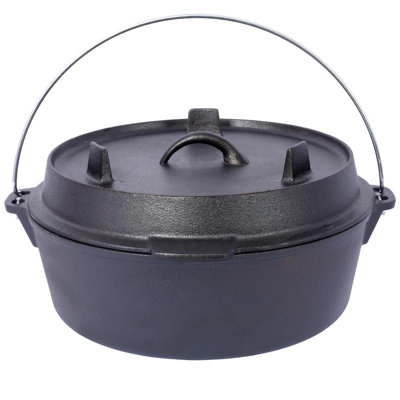
Five of the nine never-marked-down retailers are the same company. Wayfair North America, Birch Lane, Joss & Main, AllModern and Perigold all returned listings in this pull, and in the dutch-oven segment they returned the same product, at the same $165.00, with the identical image URL on assets.wfcdn.com.
That is worth stating plainly because it changes how the count reads. ‘Nine retailers never discount’ sounds like nine independent decisions. It is closer to five: one house style applied across a family of banners, plus Zoro, VitalSource and two Answear storefronts. A retailer count in an affiliate catalogue is a count of banners, not of businesses, and the two are not the same number.
Keep reading
What a ‘sale price’ is in a feed
A product feed has two price fields. One is the price the retailer wants compared against; the other is the price you would pay. Nothing in the specification says the first has to be a price anybody ever charged, and three distinct things turn up in it:
- A former price at the same retailer. The case the field was designed for, and the only one where ‘30% off’ means what a reader thinks it means.
- A comparison price from somewhere else. This is what drives Poshmark's 64.1% share and 60.0% median cut. On a resale marketplace the list price is typically the item's original retail price, often years ago. The item is second-hand; the ‘discount’ is the gap between new and used, which is not a markdown at all.
- A placeholder. $999, $9,999 and $777 recur often enough to be recognisable. We excluded them from every figure above; an earlier study on this site found 112 such rows in a 5,682-row sample.
What this data cannot show
- It cannot tell you whether a price is good. We measured whether a retailer populates a field, not whether its prices are competitive. A retailer that never marks down may simply be cheaper every day.
- It is not a US-only sample. Our API token is not authorised for the country filter, so this is a global keyword pull. Twenty-eight currencies appeared; USD was 47.6% of rows. Wayfair UK, OnBuy EU, Temu Europe and Factcool Europe are in the table because they were in the results, and a US creator would not be linking them.
- It is one morning. Every figure is 3 September 2026. A retailer that ran no promotion that day would look identical to one that never runs promotions, and we cannot separate the two from a single snapshot.
- It is 24 keywords, not a census. The sample skews to the categories we searched — home, kitchen, apparel, pets, games. A retailer's share here is its share in these results.
- We hold no commission data. The API exposes no commission field, so nothing here says what any of these listings would pay a creator.
Method and sample
- Source: CJ
shoppingProductsGraphQL query, publisher company ID 8058658, availability filtered to in-stock. - Keywords (24): dutch oven, espresso machine, cashmere sweater, hiking boots, cat tree, dog collar, board game, jigsaw puzzle, trading card, storage bin, desk lamp, throw pillow, coffee mug, sunglasses, backpack, sneakers, handbag, dinnerware set, area rug, office chair, wall art, bath towel, necklace, watch.
- Read depth: offsets 0, 100, 300, 600 and 1,200, up to 100 rows each, so a large advertiser cannot dominate purely by sitting at the top of page one.
- De-duplication: on the triple of retailer, title and destination URL. 10,575 unique rows survived.
- Inclusion threshold: 25 listings. 22 of 122 retailers cleared it.
- Markdown test: sale price strictly below list price, with the placeholder list prices named above excluded. 5,251 of 10,575 rows carried a sale price field at all; 3,803 of those were genuinely below list.
- Date: 3 September 2026. Re-runnable; we expect the always-on retailers to be stable and the middle band to move.
Frequently asked
How many retailers never show a discount?
Sixty of 122 retailers in this pull published a sale price on zero listings. Nine of those had 25 or more listings, led by Wayfair North America with 2,498.
Which retailer discounts most?
Three marked down every listing they returned: UnbeatableSale.com, Temu Europe and Qathu. Among larger retailers, Poshmark marked down 64.1% of 1,681 listings at a median 60% off — but that is a resale marketplace comparing against original retail, not a markdown.
Does a missing sale price mean the product is full price?
No. It means the retailer did not populate the field. Wayfair North America ran 2,498 listings without one, which tells you about its feed convention and nothing about its pricing.
Can I quote these numbers?
Yes. Cite them as LinkToLooks, 3 September 2026, 10,575 live listings across 24 keywords, and please carry the caveat that the sample is a global keyword pull rather than a US census.
What is the biggest weakness of this study?
It is a single day. A discount share measured once cannot distinguish a retailer that never promotes from one that was not promoting on Thursday.
Keep reading
Last verified 3 September 2026 against 10,575 live in-stock listings pulled from the CJ product catalogue during this run
How this guide was made. We research and draft these guides with AI, then a person checks every price, link and factual claim against the source before it publishes. We work this way because it lets us re-verify prices across hundreds of guides in a day, which is what keeps the numbers here current; it does not decide what we recommend. Anything we could not verify is labelled as unverified rather than filled in.