The media kit checklist
Some links here are affiliate links — if you buy, the retailer may pay us a commission at no extra cost to you. We have earned $0 from them so far. Here’s how it works.
Part of: The business of being a creatorFor creators
One page, six sections, in this order: who you are, who your audience is, proof of work, what you offer, what it costs, how to reach you. Everything else is supporting material a brand will ask for if it wants it. Export it as a PDF under 5MB, name the file with your name and the month, and re-date it quarterly.
How to use this checklist
This is a working checklist, not a template to fill in. Print it, or keep it open beside your draft, and tick items off. There is no email gate, no download, and nothing here needs an account — the whole point of a checklist is that you can act on it in the next twenty minutes.
The one page, in reading order
1. Name, handle, and one line of positioning
- Your name and the handle they will actually search for, together.
- One sentence that says what you cover and for whom. ‘Cast iron and vintage kitchen, for people who cook daily’ beats ‘lifestyle creator’.
- No mission statement. It is a media kit, not a manifesto.
2. Audience, described before it is counted
- Who they are in one or two lines: what they buy, what they are trying to do, why they follow you.
- Then the numbers: platform, follower count, and the engagement figure you can defend.
- State which engagement formula you used. There are several and a brand may recompute yours with a different one — being the person who already said which is a credibility gain.
- Geography and age split if you have them, one line, no charts.
3. Proof of work
- Two or three pieces of your own work, linked, with one line each saying what it was and what happened.
- If you have run brand work before, name the brands and the format.
- If you have not, show your best organic work in the format the brand would be buying. That is honest and it is more useful than a blank section.
- Do not include screenshots you cannot explain. You will be asked.
4. What you offer, itemised
- List formats, not packages: one Reel, one Story set, one long-form video, usage rights for a stated period.
- Say what is included by default: how many revisions, how long you hold exclusivity, whether raw files are included.
- This section is where negotiation actually happens, so make it specific enough to negotiate against.
5. Pricing
- A starting rate, a range, or an explicit ‘rates on request’ with a reason. Any of these beats silence.
- If you use a range, say what moves a project to the top of it — exclusivity, usage rights, turnaround.
- Keep it consistent with whatever your rate card says. Two different numbers in two documents is the fastest way to lose a negotiation.
6. Contact and logistics
- One email address, monitored. Not a DM.
- Your business or invoicing name if it differs from your handle.
- Typical turnaround time and current availability.
- The date the kit was last updated. Brands notice a stale kit.
Keep reading
What to cut
Every one of these appears in media kits regularly and none of them does any work.
- A mood board. Your posts are the mood board.
- Screenshots of analytics with the axes cropped off. A brand-side reader treats an uncheckable chart as an admission.
- Vanity metrics with no denominator. ‘2 million impressions’ over an unstated period is not a number.
- A list of every platform you have an account on. Include the ones you would actually deliver on.
- Stock photography. If a brand cannot see your own work in the kit, the kit has failed at its only job.
- The word ‘authentic’. Everyone writes it, so it carries no information.
The version that goes in the email body
A media kit is an attachment, and attachments get opened second. The first thing a brand reads is your email, so the kit needs a compressed version that lives in the message body.
- One line on fit. Why you and this brand, specifically. Not why you are good.
- Three numbers. Platform, audience size, and the engagement figure you can defend, with the formula named.
- One link to your best relevant piece of work. Not a portfolio, one piece, chosen for this brand.
- One sentence on price. A starting rate or a range.
- One question. Something they can answer in a line — a date, a format, a budget band. A message with no question in it has no obvious reply.
If that fits in six lines, the attachment becomes confirmation rather than homework. Keep the two consistent: if the email says one rate and the PDF says another, the lower one is now your price.
What to update, and when
| Item | Review when |
|---|---|
| Audience numbers and engagement rate | Quarterly, or after any post that moved them materially |
| Proof-of-work examples | Whenever you make something better than what is in there |
| Rates | Whenever you have said a higher number out loud and it was accepted |
| Formats offered | When you add or drop a platform you would actually deliver on |
| The date on the file | Every time you touch any of the above |
The discipline that matters most is the last row. A kit whose numbers changed but whose date did not is worse than one that is honestly three months old, because the first is wrong and the second is merely dated.
Format and file discipline
- PDF, one page, under 5MB. It will be forwarded, opened on a phone, and possibly printed.
- Name the file properly. yourname-mediakit-2026-09.pdf, not final_v4.pdf. It will sit in someone's downloads folder for months.
- Live links, not printed URLs. Every link should be clickable and should still resolve.
- Legible at phone size. Open it on your own phone before you send it once.
- Re-date it quarterly. Numbers move and a kit dated two years ago reads as an inactive account.
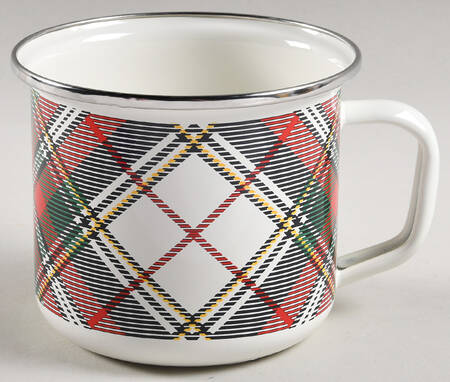
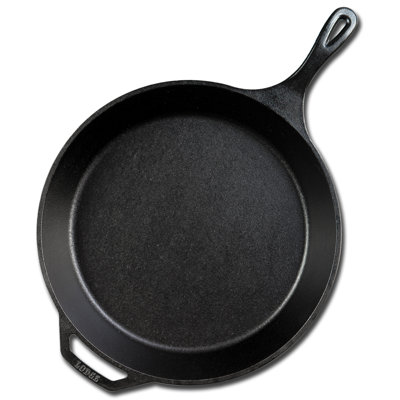
Two worked examples to price against, both pulled live on 2 September 2026: a $19.99 mug and a $20.99 skillet. Whatever you charge for a post featuring products at that level has to make sense next to what the products cost, and the media kit is where you make that case — which is exactly why the pricing section cannot be blank.
Last verified 2 September 2026 against live CJ product-feed pulls of the two product listings used as worked examples above, taken during this run
Frequently asked
What goes in a media kit?
One page: who you are, who your audience is, what you have made, what you charge or how you price, and how to reach you. Everything else is supporting material a brand will ask for if it needs it.
How long should a media kit be?
One page for the kit itself. A second page of case examples is fine. A ten-page deck is read by nobody and signals that you have not decided what matters.
Should I put my rates in it?
Put something. A blank where the price should be forces the brand to start the conversation with a number, and their number is lower than yours. A starting rate or a range is enough.
What do brands look at first?
Audience fit before audience size, then whether your existing work looks like the work they want. Both should be visible without scrolling.
Do I need a designer?
No. Legible beats designed. A clean one-pager in a standard tool that exports to PDF at a sensible file size will outperform a beautiful file that will not open on a phone.
Some links here are affiliate links. LinkToLooks has earned $0 from them to date — no network has approved us yet — so nothing on this page is picked to hit a payout.
Keep reading
How this guide was made. We research and draft these guides with AI, then a person checks every price, link and factual claim against the source before it publishes. We work this way because it lets us re-verify prices across hundreds of guides in a day, which is what keeps the numbers here current; it does not decide what we recommend. Anything we could not verify is labelled as unverified rather than filled in.