Answer desk · Jewellery prices
What does a sterling silver necklace cost?
$35.00 at the median, $20.00 to $56.00 for the middle half — measured, dated, and honest about whose market it is.
Some links here are affiliate links — if you buy, the retailer may pay us a commission at no extra cost to you. We have earned $0 from them so far. Here’s how it works.
A sterling silver necklace costs a median of $35.00 across 359 live US listings pulled on 3 September 2026, with the middle half of the market between $20.00 and $56.00.
The number carries a caveat that changes how you should read it: 358 of those 359 listings came from a single resale marketplace. This is a secondhand price, not a retail one, and the two are not the same market.
Last verified 3 September 2026 against 359 live US sterling silver necklace listings
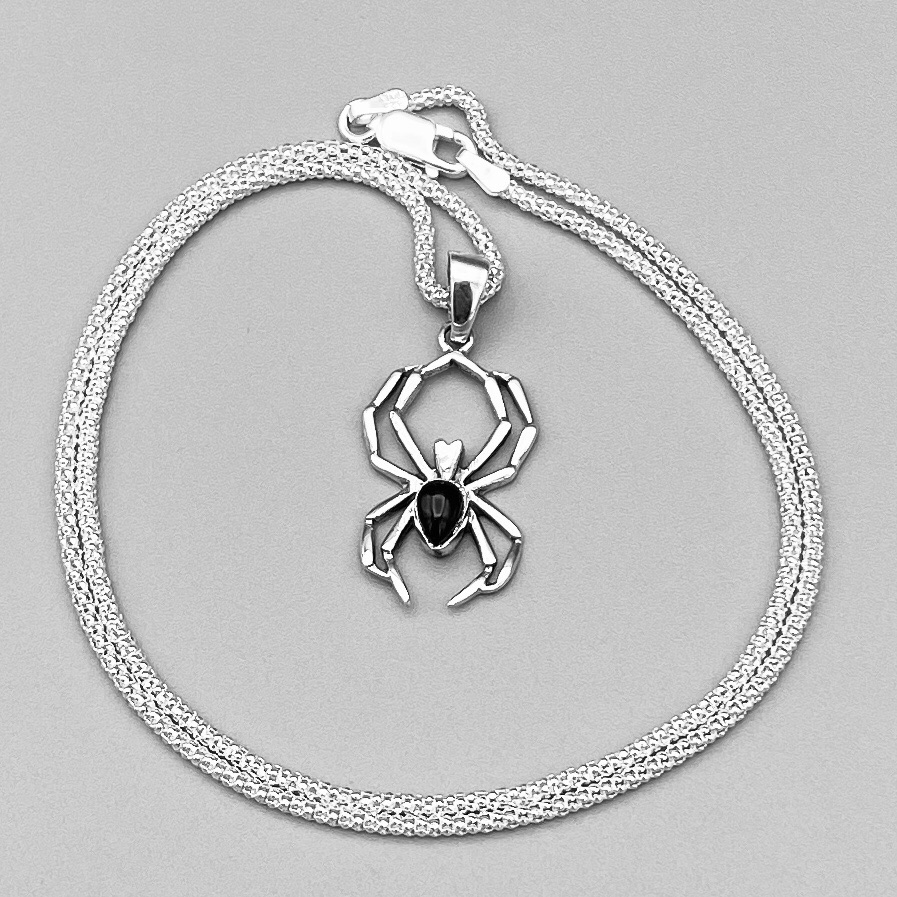
The price, and its spread
| Measure | Value |
|---|---|
| Listings | 359 |
| Median price | $35.00 |
| 25th percentile | $20.00 |
| 75th percentile | $56.00 |
| Distinct retailers | 2 |
| Carrying a markdown | 192 (53.5%) |
| Median markdown where present | 58.7% |
Placeholder prices — $999, $7,777, $999,999 and similar feed sentinels — are excluded from every median on this page. They are not offers.
The spread is the useful part. Half the market sits between $20.00 and $56.00, which is a narrow band for a category that runs from a plain chain to a hand-made pendant. Silver is cheap enough that the metal is rarely what you are paying for; above about $56 you are paying for the making.
Asking price, not list price — and the gap is large
Every median above is the effective price: the sale price where a listing carries one, and the list price where it does not. That distinction matters more here than in most categories, because the two differ so much. The median list price in the same 359 listings is $56.00 against an effective median of $35.00 — a gap of 38%.
Quote the list figure and you have published a number nobody is being asked to pay. We got this wrong in an earlier draft of this page and are noting it because the same trap sits in every feed-derived price you will read anywhere.
Who is actually selling
2 retailers returned listings and one of them accounted for 358 of 359. That is not a market with competing sellers; it is one marketplace with a lot of individual sellers inside it.
What follows from that, practically:
- The prices are asking prices, not shelf prices. A resale listing is what somebody hopes to get.
- The 53.5% of listings showing a markdown and a 58.7% median cut are not sales in the retail sense. On a resale marketplace the higher number is often the original retail price the seller is quoting, not a price anybody was charging last week.
- Condition is not in the price. The data carries a condition field but nothing about tarnish, clasp wear or whether a chain has been shortened, all of which move the real value.
Keep reading
What .925 buys you
Sterling silver is 92.5% silver by weight, the balance usually copper, and 925 is its millesimal fineness — the same parts-per-thousand system that gives you 585 for 14 carat gold. The copper is not adulteration; pure silver is too soft to hold a clasp or a setting.
Three things the mark does not tell you, and each is worth more than the price difference between two listings:
- Whether the chain is solid or hollow. A hollow rope chain and a solid one can carry the same mark and differ several times in weight, price and lifespan.
- What the clasp is made of. Frequently a different metal, and it is the part that fails.
- Whether it is plated on top. Gold-coloured .925 is gilded silver — vermeil — and the mark describes the metal underneath the plating, not the surface you can see.
What each price band gets you
| Band | Share of the pull | Typically |
|---|---|---|
| Under $20 | About a quarter | Light chains and small pendants; the metal is a minor part of the cost |
| $20 – $35 | About a quarter | The commonest band: a substantial chain or a simple made pendant |
| $35 – $56 | About a quarter | Heavier weight, or design rather than a stock chain |
| Over $56 | About a quarter | Maker-made, branded, or resale of a piece that retailed far higher |
The editorial judgement, since a table alone is not advice: the band around the median is where the value sits. Below $20 you are usually buying a chain thin enough that the clasp will be the best part of it, and the top quartile on a resale marketplace is largely a bet on a brand name we cannot verify from a listing.
Frequently asked
How much does a sterling silver necklace cost?
A median of $35.00 across 359 live US listings on 3 September 2026, with the middle half between $20.00 and $56.00. Almost all of those listings were resale, so this is a secondhand price.
What does .925 mean?
Sterling silver: 92.5% silver by weight, the rest usually copper, stated as parts per thousand.
Why is one .925 necklace $20 and another $200?
Weight and making, not purity. The mark is identical on a hollow chain and a solid hand-made piece.
Are the markdowns on these listings real?
192 of 359 listings carried one, at a median cut of 58.7%. On a resale marketplace the higher figure is often the original retail price rather than a price the seller was charging recently.
Is gold-coloured .925 real silver?
Yes — it is silver with gold plating over it, called silver-gilt or vermeil. The mark refers to the base metal.
Method and limits
- 359 US-priced, in-stock listings pulled on 3 September 2026 through the CJ shopping-product API, de-duplicated on retailer, title and destination URL, filtered strictly on the listing title.
- Placeholder prices are excluded. Medians are of the price a shopper would pay.
- Not a retail price. 358 of 359 listings came from one resale marketplace, so this measures the resale market and says little about high-street pricing.
- Not verified: condition, chain construction, clasp metal or plating on any individual listing. None of it is in the data.
- We have not handled any of these necklaces. We priced them.
Keep reading
How this guide was made. We research and draft these guides with AI, then a person checks every price, link and factual claim against the source before it publishes. We work this way because it lets us re-verify prices across hundreds of guides in a day, which is what keeps the numbers here current; it does not decide what we recommend. Anything we could not verify is labelled as unverified rather than filled in.