What does enamelware cost, and who sells it?
Some links here are affiliate links — if you buy, the retailer may pay us a commission at no extra cost to you. We have earned $0 from them so far. Here’s how it works.
Across 167 matched live in-stock US listings on 2 September 2026 the median enamelware price was $48.99, with a middle half of $36.99 to $69.95 and pieces available from $7.99. Twelve retailers carried it; one large home retailer supplied 89 of the 167 rows, and the cheapest source was a replacement-china specialist selling open stock at a median of $19.99.
What it costs, measured today
Enamelware is one of those categories where the word covers a $9 prep bowl and a $220 roaster, so a single average would mislead. Here is the distribution.
| Measure | Value |
|---|---|
| Live in-stock US listings in scope | 2,480 |
| Rows matched and de-duplicated | 167 |
| Distinct retailers | 12 |
| Median | $48.99 |
| Middle half | $36.99 – $69.95 |
| Cheapest / dearest | $7.99 / $777.00 |
| Rows under $25 | 23 |
| Rows at $100 or more | 20 |
Method: CJ product API, US advertisers, in-stock only, keyword pull filtered to listing titles containing the term, de-duplicated by title and retailer, pulled 2 September 2026 during this run. Prices are what the retailer displayed at that moment and will move.
Last verified 2 September 2026 against a live CJ product-feed pull of 2,480 in-stock US enamelware listings, of which 167 were matched and de-duplicated during this run
Who is actually selling it
Retailer concentration decides how much choice you have and how durable a saved link is. This category is moderately concentrated: one retailer holds just over half.
| Retailer type | Rows of 167 | Median in our sample |
|---|---|---|
| Large general home retailer | 89 | $48.99 |
| Replacement-china specialist | 39 | $19.99 |
| Design-led home retailer | 16 | $44.00 |
| Resale marketplace | 7 | $79.00 |
| Department stores (four banners) | 10 | $97.00 |
| Other home retailers | 6 | $44.50 |
The replacement specialist is the cheap end and the department stores the dear end, which is the reverse of what most people assume. The specialist is selling individual open-stock pieces; the department stores are selling boxed sets.
Five real listings, priced
Sea Glass individual tasting bowl — $8.99
- The entry point. Small open-stock pieces from the specialist are the cheapest way into a colour.
- Buying open stock rather than a set lets you test whether you actually like eating off enamel before committing.
Red Swirl 4-inch prep bowl — $13.99
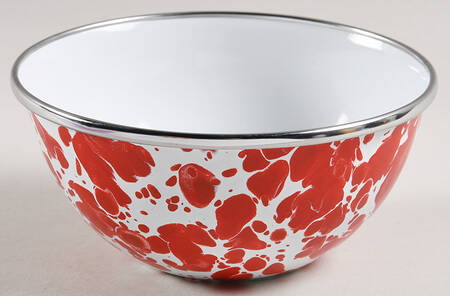
- Prep bowls are the most-used enamel piece in a working kitchen and the most forgiving of chips, because they are not going in the oven.
- Swirl patterns are contemporary production, not old graniteware.
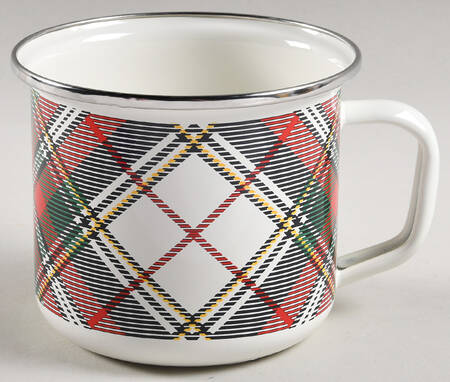
Highland Plaid grandmug — $19.99
- A mug at twice the price of a ceramic one, bought for the look and the fact that it will not break.
- Enamel conducts heat: a hot drink makes the rim hot. This is a real usability trade and nobody's product page mentions it.
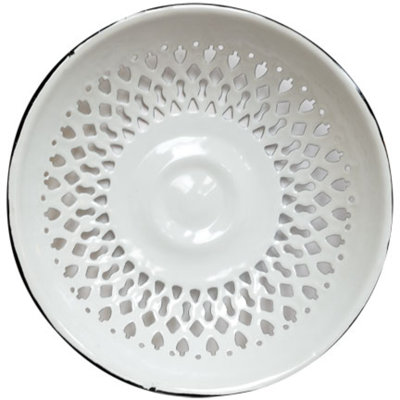
Enamelware bread plate — $24.99
- Mid-market pricing from a large general retailer.
- At this level you are usually buying a design brand's colourway rather than a functional difference.
2.75oz enamelware goblet — $59.99
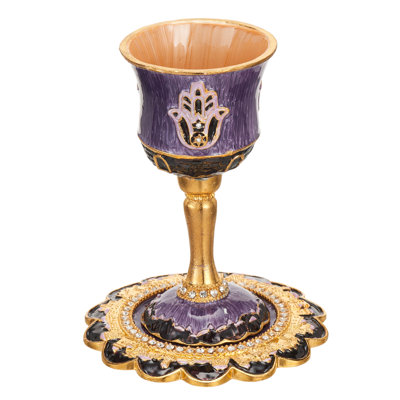
- The top of the everyday range, and a good illustration of why a median beats an average here.
- Decorative pieces — goblets, lighters, table accessories — carry most of the price spread.
Keep reading
Enamel over what? The question the listings do not answer
Enamel is a coating, not a material, and what sits under it decides how the piece behaves. Almost no product listing says which you are buying, so here is how to work it out.
| Substrate | How it feels | What it does well | Failure mode |
|---|---|---|---|
| Rolled sheet steel | Light, thin, rings when tapped | Camping, prep, serving, hanging on a hook | Chips at the rim; the exposed steel rusts |
| Cast iron | Very heavy for its size, dull thud | Braising, oven-to-table, heat retention | Chips in the cooking surface end the pan's life |
| Aluminium | Light but stiff, no ring | Even heating on a hob | Warps under a hard flame |
- Weight is the whole test. A 10-inch steel enamel plate weighs a few ounces; a 10-inch enamelled cast iron pan is several pounds. You do not need to see the label.
- Price is the second test. Almost everything in our $8–$50 band is steel. Enamelled cast iron starts higher — the one enamelled cast iron skillet in our related pull was $41.99 and that was the cheap end.
- Rim colour tells you about the finish. A raw dark rim is a deliberate design choice on some brands and an unfinished edge on others. Either way it is where rust starts.
Chips, care, and what actually ends a piece
Enamelware fails in one specific way and it is worth knowing before you buy secondhand.
- A chip on the outside is cosmetic. It will darken and may spot with rust, and it will not spread quickly.
- A chip on a food surface is the end of the piece for cooking. Exposed steel in contact with acidic food rusts and stains, and there is no home repair that restores an enamel surface.
- Thermal shock cracks the coating. A hot enamel pan into cold water is how a good piece becomes a planter.
- Metal utensils are fine, abrasives are not. The coating is glass; it scratches dull and then it stains.
The buying consequence: on a resale listing, ask for a photograph of the inside base. That is where the damage that matters lives, and it is the shot sellers most often leave out.
A note on the word graniteware
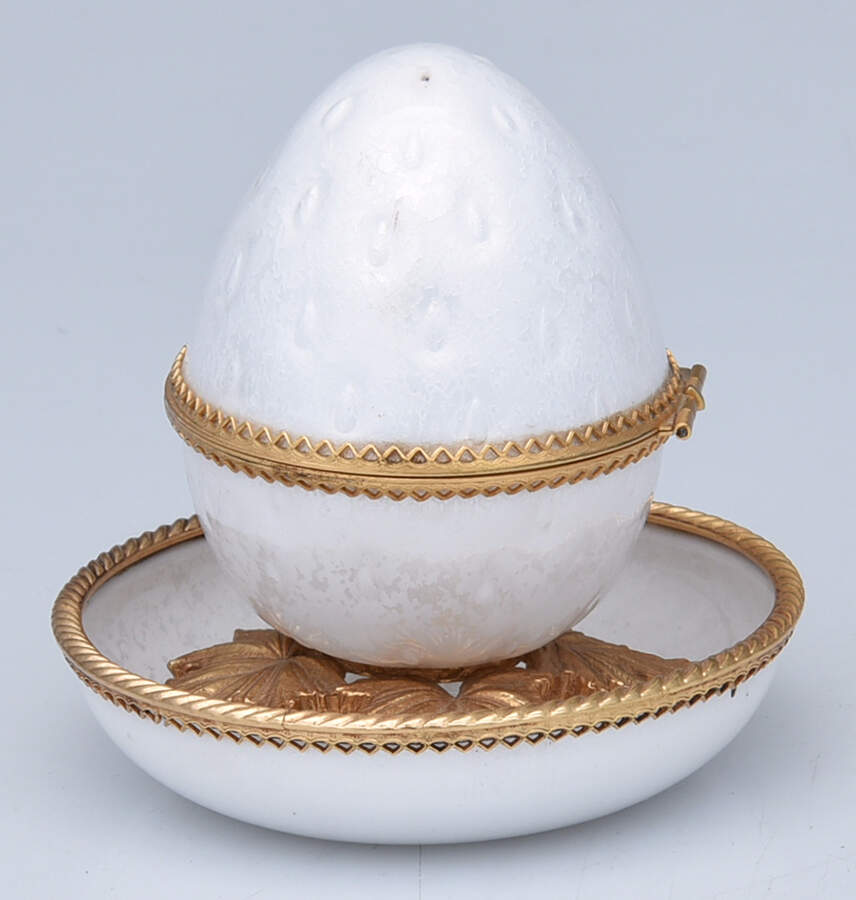
Graniteware and enamelware describe the same construction: rolled sheet iron, stamped to shape, dipped in enamel and baked. The mottled grey-blue finish that gave graniteware its name came from a process developed in 1875, and it was called Granite Ironware because granite was used in the enamelling.
Source: the Wikipedia entry for Graniteware, read 2 September 2026.
Separately, Granite Ware is a live brand name today. Our pull surfaced ten current listings under that name — a canner and rack at $39.45, a steel saucier at $25.99, a food mill at $96.38 — from industrial and home retailers. A search for graniteware will therefore return new cookware, dollhouse miniatures and, in our pull, one vintage t-shirt. It will not reliably return antiques.
Frequently asked
How much does enamelware cost?
Across 167 matched live in-stock US listings on 2 September 2026 the median was $48.99, with a middle half of $36.99 to $69.95. Individual pieces start under $10; full sets and serving pieces run past $200.
Who sells enamelware?
Twelve retailers appeared in our matched rows. One large home retailer supplied 89 of the 167, a replacement-china specialist 39, and a design-led home retailer 16. The rest were department stores and one resale marketplace.
Is enamelware the same as graniteware?
Graniteware is the old name for the same idea: sheet iron dipped in enamel and baked. The mottled finish that gave it the name was patented in 1875, and the maker called it Granite Ironware because granite was used in the enamelling process.
Is most enamelware on sale new or vintage?
New. In our pull only 7 of 167 matched rows came from a resale marketplace; the rest were current retail stock, and a single contemporary brand accounted for 23 of the 60 rows we inspected by hand.
What should I avoid?
Chips down to the metal, which will rust, and any piece being sold as antique on the strength of a mottled finish alone — the mottling has been made continuously for 150 years.
Some links here are affiliate links. LinkToLooks has earned $0 from them to date — no network has approved us yet — so nothing on this page is picked to hit a payout.
Keep identifying
How this guide was made. We research and draft these guides with AI, then a person checks every price, link and factual claim against the source before it publishes. We work this way because it lets us re-verify prices across hundreds of guides in a day, which is what keeps the numbers here current; it does not decide what we recommend. Anything we could not verify is labelled as unverified rather than filled in.