LinkToLooks · Guides · Reference Desk
Reference Desk
How do you date a CD by its packaging?
Packaging dates a CD more reliably than the disc does. A 12-inch cardboard longbox puts a North American release in the 1980s or the first years of the 1990s, because longbox packaging was phased out officially on 1 April 1993. A standard jewel case, at 142 by 125 by 10 millimetres, has been in use since the format launched in 1982 and dates nothing on its own — but the slimline case, the digipak and the card sleeve each carry their own signals.

The longbox, and the date it ended
- A longbox was exterior paperboard packaging around the jewel case, 12 inches (30 cm) tall — the same length as a 33⅓ LP, so that record shops could sell CDs from the LP racks they already owned.
- It was in widespread use in North America through the 1980s and into the early 1990s, and could hold two discs where a release needed it.
- It was phased out officially as of 1 April 1993, after the "Ban the Box" campaign launched in 1990 by the Earth Communications Office, a coalition formed within the US entertainment industry around environmental concerns.
- The industry case was not purely environmental: eliminating the longbox was estimated to save distributors in the region of $25 million.
For a collector that single date is the useful part. A sealed longbox is a pre-April 1993 North American artefact by definition, and it is the packaging most often thrown away at the point of sale, which is why intact ones are scarce relative to the discs inside them.
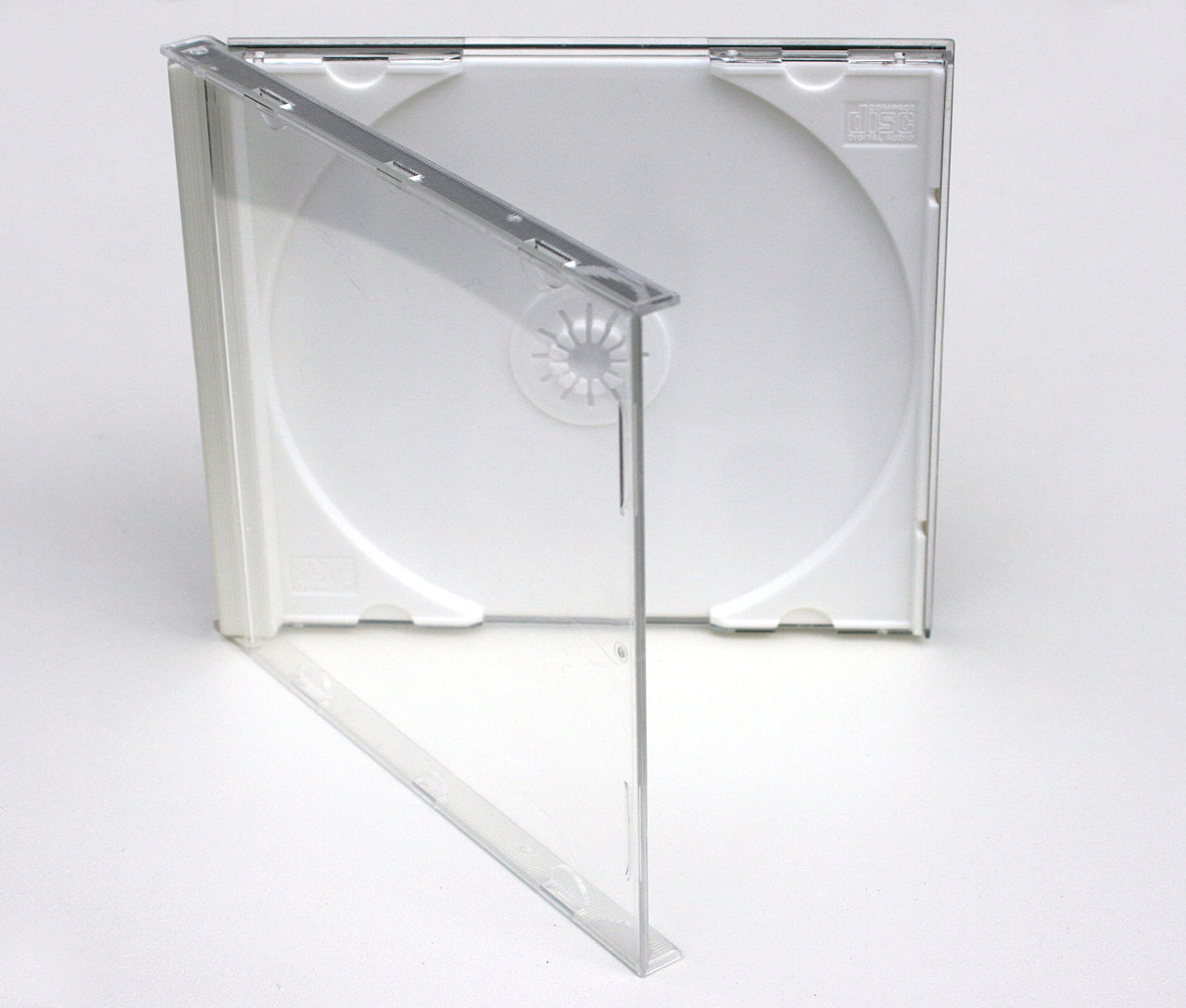
The jewel case and its dimensions
| Case type | Dimensions | What it tells you |
|---|---|---|
| Standard jewel case | 142 × 125 × 10 mm | In use since the format launched in 1982. Dates nothing by itself, which is exactly why the outer packaging matters. |
| Slimline jewel case | 142 × 125 × 5 mm | Half the depth. Singles, promotional discs and multi-disc sets that needed to fit a shelf. |
| Digipak | Card outer with a moulded tray | A deliberate presentation choice rather than a default, so it signals a release someone spent money on. |
| Card sleeve | Paper or card, no tray | Budget reissues, box-set inners and promos. |
The jewel case was designed by Peter Doodson, who specified polished ribs because they pick up light and shine — which is where the name came from. Its three chronic weak points are worth knowing before you buy a used copy:
- The hinge. Two brittle plastic arms that break when the case takes a shock. The single most common damage there is.
- The hub teeth. The teeth that grip the disc snap, after which the disc rattles loose in the tray.
- The booklet tabs. They grip liner notes too tightly, so booklets tear at the spine when they are pulled out.
Keep identifying →
Slimlines, digipaks and sleeves
- A slimline case with a full-size booklet is usually a replacement rather than original packaging — the booklet was made for the deeper case.
- A digipak with a cracked tray is the norm, not the exception. The moulded tray is glued to card and separates over time; this is why digipak-only releases grade lower on average than jewel-case ones.
- A card sleeve inside a box set is original. A card sleeve on its own, for an album that was released in a jewel case, is a later budget pressing.
- A jewel case with no hub teeth left is worth replacing before storage. Replacement cases are cheap, and a loose disc rattling against a broken hub is how surface scratches happen.
What packaging condition is actually worth
An editorial position, because grading conventions here are looser than collectors admit:
- The booklet matters more than the case. Cases are replaceable for pennies; a missing or torn booklet is not.
- The rear inlay matters nearly as much, because it carries the catalogue number and barcode that identify the pressing.
- The case itself is close to worthless as a condition factor, unless it is an original longbox or a special-format outer that cannot be replaced.
- A listing photographed only from the front is hiding the spine and the rear inlay. Ask for both.
Why every CD wallet is the same size
The 142 by 125 millimetre footprint is why disc storage is so standardised: sleeves, wallets and racks are all built around a fixed rectangle, which is unusual in a consumer product category and very convenient for buyers. It also means capacity is the only real variable, and capacity is what we costed separately.
Last verified 1 September 2026 against published dimensions and dates for CD packaging formats as cited below, and the 1 April 1993 longbox phase-out date in particular
Frequently asked
When did CD longboxes stop being used?
Longbox packaging was phased out officially as of 1 April 1993, after the "Ban the Box" campaign launched in 1990 by the Earth Communications Office. A longbox therefore dates a North American release to before that.
How big is a CD jewel case?
142 by 125 by 10 millimetres for the standard case, and 142 by 125 by 5 millimetres for the slimline. The footprint is identical; only the depth changes.
Why was the CD longbox 12 inches tall?
Because that is the length of a 33⅓ LP, so record shops could sell compact discs from the racks they already had rather than refitting.
Does a broken jewel case reduce a CD’s value?
Very little. Cases are cheap and replaceable. A missing or torn booklet or rear inlay matters far more, because those carry the artwork and the catalogue number.
Who designed the CD jewel case?
Peter Doodson, who specified the polished ribs because they catch the light — the detail the case is named for.
Sources
- Longbox — the 12-inch height, the widespread North American use through the 1980s and early 1990s, the official phase-out on 1 April 1993, the "Ban the Box" campaign launched in 1990 by the Earth Communications Office, and the approximately $25 million distributor saving.
- Optical disc packaging — jewel case dimensions of 142 × 125 × 10 mm and slimline 142 × 125 × 5 mm, Peter Doodson as designer, the polished-rib specification, and the three named failure points: brittle hinge arms, snapping hub teeth and booklet tabs that tear liner notes.
- Images via Wikimedia Commons: longbox (CC0), jewel case by Ramón Vasconcellos (CC BY 2.5).
Keep identifying →
How this page was made. Drafted with AI (Claude); not yet independently re-checked. How we work