Creator economy · Niche guides
Is “lifestyle” a category brands will actually pay for?
Candles at $22.99 across eighteen retailers; tote bags at $169.50 from one resale marketplace with a middle half spanning thirty-fold. Five subcategories, five unrelated markets, one word on the bio.
Some links here are affiliate links — if you buy, the retailer may pay us a commission at no extra cost to you. We have earned $0 from them so far. Here’s how it works.
“Lifestyle” describes an audience, not a purchasable category, and the affiliate data makes that plain. On 2 September 2026 the five things a lifestyle creator typically posts returned five different price populations from five different retailer sets: candles at a $22.99 median across 18 US retailers, planners at $17.17 across 15, and tote bags at $169.50 from one resale marketplace with a middle half running $32.00 to $1,015.00. Treat them as separate businesses.
The category that is not a category
Every affiliate network has a taxonomy and none of them has a lifestyle aisle, because shops are organised by what things are and lifestyle is a statement about who is buying. That mismatch is invisible until you try to build a link strategy on it, at which point it becomes the whole problem: a programme approval covers a retailer’s catalogue, and no retailer’s catalogue is shaped like a lifestyle feed.
So we measured what a lifestyle creator actually posts, one product type at a time, and looked at whether the results behave like one market.
Five subcategories, five different markets
| Subcategory | Listings matched | Median | Middle half | Distinct retailers |
|---|---|---|---|---|
| Candles | 182 | $22.99 | $16.99 – $37.00 | 18 |
| Planners and journals | 126 | $17.17 | $10.77 – $30.00 | 15 |
| Tote bags | 44 | $169.50 | $32.00 – $1,015.00 | 1 |
| Throw blankets | 12 | $30.09 | $15.95 – $52.69 | 4 |
Method: CJ product API, US advertisers, five lifestyle seed terms pulled during this run on 2 September 2026, de-duplicated by link and title into a pool of 822 rows, then filtered to titles naming the product type.
Two of these rows describe a competitive retail market with a predictable price. One describes a resale marketplace with no price expectation at all. One is too thin to plan around. They have nothing in common except the person posting them.
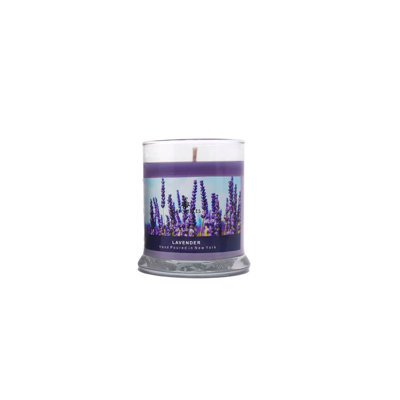
Candles
- 182 matched listings, 18 retailers, median $22.99, middle half $16.99 to $37.00.
- The best programme choice in lifestyle and the tightest price expectation: a reader knows roughly what a candle costs, so a link that lands well above the middle half needs a sentence explaining why.
- 27 of the 182 carried a sale price, so discounting is present but not dominant.
Planners and journals
- 126 matched listings, 15 retailers, median $17.17.
- 43 carried a sale price — a third of the subcategory, and the commission base moves with it.
- Strongly seasonal in a way the other rows are not, which makes this the one lifestyle subcategory where publishing early actually matters.
Throw blankets
- 12 matched listings across 4 retailers, median $30.09.
- Twelve rows is thin enough that the median is indicative rather than reliable, and we would not build a post around it.
Keep reading
The tote-bag row, and what it proves
44 matched listings, all from one resale marketplace, median $169.50, middle half $32.00 to $1,015.00. A middle half spanning a factor of thirty is not a price range, it is evidence that the rows are not the same kind of object: a canvas shopper and a designer resale piece share a noun and nothing else.
For a creator this matters in a specific, expensive way. If you tell a reader you are recommending a tote and the link lands at $1,015, you have not made a bad recommendation — you have made an unanswerable one, and the reader learns that your links are unpredictable. Price predictability is a trust asset and it is the first thing a mixed category destroys.
26 of those 44 listings also carried a price below the seller’s original ask, which on a resale marketplace means something different again from a retailer promotion. Same word, different mechanics, and the feed does not distinguish them for you.
Last verified 2 September 2026 against live CJ product-feed pulls of five lifestyle seed terms taken during this run, filtered by product type and de-duplicated by link and title
Some links here are affiliate links. LinkToLooks has earned $0 from them to date — no network has approved us yet — so nothing on this page is picked to hit a payout.
A measurement that went wrong, published anyway
What to do with two subcategories instead of six
- Name the two things your audience actually buys from you. Not the six you post about — the two that convert.
- Apply to programmes for those two only. Candles and planners between them had 33 distinct retailers in this pull; that is more choice than any creator needs.
- Keep one price population per post. A $17 planner and a $169 bag do not belong in the same list.
- Let the third subcategory be unmonetised. Posts that carry no link are what make the ones that do believable.
The position: two subcategories, treated as two businesses
Taking a position, since the data supports one. A lifestyle creator who picks two subcategories and treats them as separate businesses will do better than one who treats lifestyle as a single business, and the evidence is in the retailer columns above.
Candles and planners between them returned 33 distinct US retailers. That is more programme choice than any individual creator can use, and it means a rejection from any one of them costs an afternoon rather than a category. Tote bags returned one retailer. Throw blankets returned four across twelve listings. Those are not the same business risk, and no amount of audience growth changes it.
The second half of the argument is about the reader rather than the catalogue. A post that pairs a $17 journal with a $169 bag asks one person to be two different shoppers in the same scroll. The cheap item absorbs the clicks; the expensive one was supposed to carry the earnings; and the reader learns that your links are unpredictable, which is the expensive part.
What would change our mind: a lifestyle creator’s own statements showing that mixed-price posts convert as well as single-band ones. We have no such data, and neither does anyone publishing the opposite advice.
Frequently asked
Is lifestyle a real affiliate category?
Not as a purchasable one. Measured on 2 September 2026, the five things a lifestyle creator typically posts came from five different price populations and five different retailer sets: candles at a $22.99 median across 18 retailers, tote bags at $169.50 from a single resale marketplace.
What should a lifestyle creator do instead?
Pick the two subcategories your audience actually buys and treat each as its own business, with its own programme, its own price expectation and its own post format. The label above them is for your bio, not your link strategy.
Which lifestyle subcategory has the best programme choice?
Candles, on our numbers: 182 matched listings across 18 distinct US retailers. Planners and journals were second at 126 listings across 15.
Why do lifestyle roundups perform badly?
Usually because they mix price populations. A post pairing a $17 journal with a $169 bag asks one reader to be two different shoppers, and the cheaper item absorbs the clicks while the expensive one was supposed to carry the earnings.
Can you tell me lifestyle commission rates?
No. We could not source a current, citable category rate from any public route we tried, and we do not reprint rate tables we cannot check.
Sources and scope
- All counts, medians, quartiles and retailer counts: CJ product API, US advertisers, pulled 2 September 2026 during this run.
- Sample: 822 de-duplicated rows across five lifestyle seed terms, filtered to 364 rows whose titles name the product type; one subcategory was discarded after title review and is described above.
- No commission rate, conversion rate or earnings figure is asserted.
Keep reading
How this guide was made. We research and draft these guides with AI, then a person checks every price, link and factual claim against the source before it publishes. We work this way because it lets us re-verify prices across hundreds of guides in a day, which is what keeps the numbers here current; it does not decide what we recommend. Anything we could not verify is labelled as unverified rather than filled in.