LinkToLooks · Guides · Creator Desk
Creator Desk
Which email platforms allow affiliate links? All seven we read, and six draw the same line
Mailchimp, MailerLite and Ghost each ban “affiliate marketing” in their rules, Kit bans content that is “100% affiliate based”, and all four allow affiliate links. The difference between affiliate marketing and an affiliate link is the thing a creator’s newsletter has to get right.
Part of: For creators
All seven allow affiliate links in a creator’s own newsletter, and six of them say outright that a newsletter which is only affiliate links is not allowed. Mailchimp says affiliate marketing is prohibited but affiliate links are “usually fine”. Kit allows them “properly marked” and suggests keeping them to about 20–30% of your content. MailerLite says affiliate links are “fine in most cases”. Ghost(Pro) never mentions single links and bars only sites that exist to push affiliate traffic; Substack allows links and bars link-purpose publications. beehiiv allows “the occasional use of affiliate links” and bans newsletters built for affiliate revenue. Brevo is the exception: its Acceptable Use Policy never mentions affiliates at all.
We read each platform’s own policy and help pages on 28 September 2026 (Substack on 27 September, beehiiv and Brevo on 29 September).
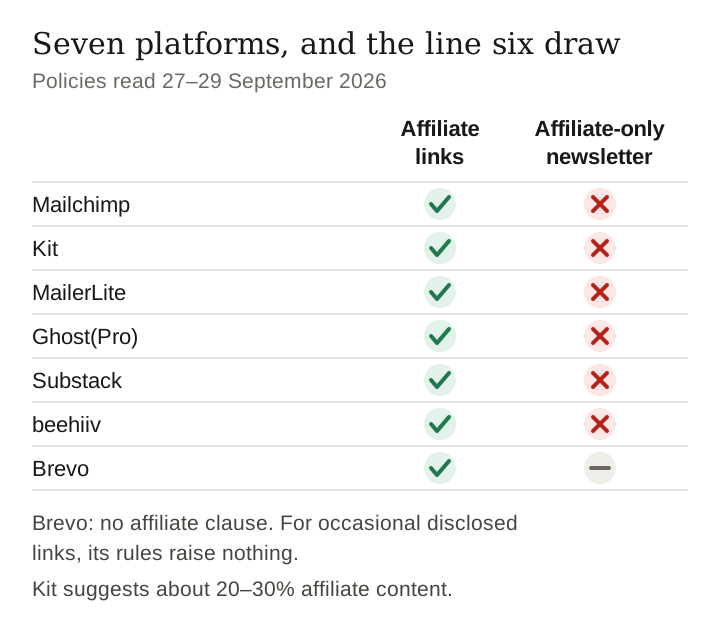
The seven platforms side by side
| Platform | Documents read | Affiliate links | Extra restrictions |
|---|---|---|---|
| Mailchimp | Acceptable Use Policy (updated 26 September 2025); help article “About Affiliate Links in Mailchimp” | “Affiliate marketing” is on the list of businesses Mailchimp “may not allow”. Links are “usually fine” if not denylisted and your “main message isn’t centered around affiliate links”. | Automatic scan for denylisted URLs; a hit stops the email and suspends the account for review |
| Kit | Acceptable Use Policy (modified 7 May 2026); help article (modified 29 Jun 2026) | Links fine “as long as they are properly marked”; no content that is “100% affiliate based”; about 70–80% own content, 20–30% affiliate | No affiliate links for education, loans, online pharmacies or get-rich-quick software; no CPA-affiliate type sites |
| MailerLite | Terms of Use, section 13 (last updated 22 Sep 2026); help article (last edited 6 Dec 2023) | “Affiliate Marketing is prohibited in MailerLite, but Affiliate Links are fine in most cases”; links must be “clearly presented as offers from another company” and fit your brand | Weight-loss material, get-rich-quick and loans among banned content; blacklisted links can suspend the account |
| Ghost(Pro) | Abuse and content guidelines | Sites “primarily dedicated to drive traffic to third party sites”, to SEO boosting, phishing or spoofing, or to “promote affiliate marketing” are not permitted. Individual links are not mentioned, so not forbidden | Applies to hosted Ghost(Pro); a self-hosted Ghost install is governed by your own host. No promoting gambling products or advertising gambling companies |
| Substack | Help centre and content guidelines (read 27 Sep 2026) | Affiliate links allowed; no built-in affiliate tools; publications whose purpose is link traffic are not | No imports of bought or scraped email lists; no publications mainly for ads, traffic or offers (our Substack guide) |
| beehiiv | Acceptable Use Policy (last modified 16 July 2026) | “the occasional use of affiliate links is allowed”; content made “primarily for affiliate marketing” is not | Bans “affiliate link spam” and click arbitrage; no promoting prescription medications or unapproved dietary supplements; no affiliate programmes for non-compliant health products; CBD and gambling affiliate content must not be undisclosed |
| Brevo | Terms of Use (version 1 October 2025); Acceptable Use Policy (Appendix 7) | Neither document mentions affiliate links or affiliate marketing | No bought or scraped lists; partner co-registration limited to 10 named partners; no offers “to make money passively or with no effort”; refuses THC products, peptide weight-loss products and forex; weight loss and gambling need vetting first |
Sources: Mailchimp help, Mailchimp Acceptable Use Policy, Kit help, Kit Acceptable Use Policy, MailerLite Terms, MailerLite help, Ghost abuse guidelines, Substack help, Substack Content Guidelines, beehiiv Acceptable Use Policy, Brevo Acceptable Use Policy, Brevo Terms of Use. Dates are each page’s own modified stamp where it shows one.
Last verified 29 September 2026 against beehiiv’s and Brevo’s own policy pages; Mailchimp, Kit, MailerLite and Ghost as read on 28 September 2026 and Substack on 27 September 2026

beehiiv and Brevo, added 29 September
Both pages were unreadable to us on 28 September. On 29 September both answered, and they sit at opposite ends of the table.
beehiiv: the most explicit rulebook of the seven
- The allowance: “the occasional use of affiliate links is allowed”, and newsletters “may include affiliate links, product mentions, or sponsored placements”.
- The line: content “created primarily for affiliate marketing or lead generation purposes” is not permitted, including “excessive or manipulative use of affiliate links solely for revenue generation, without adding genuine value”.
- Named bans: “Click/Traffic Arbitrage”, meaning newsletters used solely to drive subscribers to external sites for clicks, referrals or affiliate conversions, and “Affiliate link spam” in its community rules.
- Niche rules: no affiliate or referral programmes that send readers to non-compliant health products; in CBD and gambling content, “undisclosed commercial practices” and affiliate content “that lacks required disclosures” are named violations.
beehiiv gives no ratio, unlike Kit. “Occasional” and “primarily” are the words it chose, so Kit’s 20–30% guide is a reasonable reading of it, not beehiiv’s own number.
Brevo: no affiliate clause at all
We searched Brevo’s Terms of Use and its Acceptable Use Policy, which is Appendix 7 to those terms. Neither mentions affiliate links or affiliate marketing; “affiliate” appears only in the corporate-group sense and in a reference to Brevo’s own Affiliate Program. What Brevo does police is the list and the offer:
- No contacts that were “scraped on the internet, acquired or purchased from a third-party”.
- Consent must be active and explicit, and partner co-registration must name every partner on the form, limited to 10.
- Refused regardless of legality: offers “to make money passively or with no effort”, get-rich-fast promises and pyramid schemes, among others.
- For SMS: no unbranded shortened URLs in messages to US numbers.
Our reading: silence is not permission to run an affiliate-only list on Brevo. Its rules are written around recipients expecting what they get, and a newsletter that exists to forward other companies’ offers fails that test in spirit. For a creator newsletter with the occasional disclosed link, Brevo’s rules raise nothing.
The line six of the seven draw
Read side by side, the four rulebooks we read on 28 September (Mailchimp, MailerLite, Kit and Ghost(Pro)) make the same distinction in different words; beehiiv and Substack draw it too, and Brevo is silent. Affiliate marketing is a business: sending other companies’ offers to a list for commission. An affiliate link is a detail: a commission link inside a newsletter that exists for its own reasons.
- Mailchimp defines affiliate marketing as a business model in which marketers are “typically paid commission to generate leads or sales for a third party”, and says why it bans it: such senders have “no real obligation to maintain relationships with contacts”.
- MailerLite defines it as “the promotion of multiple referral links from various third-party companies purely to generate commission-based income”, and gives the clearest example we found: a travel blog linking furniture it has no connection to is affiliate marketing; the same blog linking travel gear is fine.
- Kit puts it as a test: “You need to have your own business/content outside of affiliate marketing.”
- Ghost(Pro) uses a spam rule that is, word for word, almost the same as WordPress.com’s: sites “primarily dedicated to drive traffic to third party sites”, to SEO boosting, phishing or spoofing, or to “promote affiliate marketing”.
Our position: the question to ask of your own newsletter is MailerLite’s, not “how many links is too many”. Would a subscriber who signed up for your topic expect this product in this email? If yes, every platform we read allows the link. If the product is there only because it pays, six of the seven are describing you when they ban affiliate marketing or promotion-only sending; Brevo’s rules are silent.
Keep reading
Kit is the only one that gives a number
Kit’s help article is the only document we read that puts a figure on it: if 70–80% of your email content is about your own products, services and work, and around 20–30% is affiliate, “you are good to go”. Its own examples:
- Fine: a baking site sends a recipe email and links the kitchen equipment it likes. Kit adds that you should say the link goes to another site and not imply the product is yours.
- Not fine: emails that are “solely” affiliate links for diets, software upgrades and trainings, from someone with no business or content of their own.
Treat the ratio as Kit’s rule of thumb, not a measured threshold: Kit does not say how it measures a percentage of an email, and a gift-guide issue that is mostly links is not obviously outside the spirit of the rule if the rest of your newsletter is your own work.
Niches you cannot link, whatever the ratio
Most of these platforms also bar some kinds of product outright, and these override the ratio:
- Kit: no affiliate links related to education, loans, online pharmacies or “get rich quick” software, “regardless of your own business”; no “CPA affiliate type sites”, network marketing or “affiliate educational offers”.
- MailerLite: no weight-loss material, get-rich-quick schemes, forex, loans or quick credit, gambling, or MLM.
- Mailchimp: may refuse businesses in pharmaceuticals, make-money-online schemes, gambling, MLM, credit repair and cryptocurrency, and reviews supplements, dating and trading content more closely.
- Ghost(Pro): discussing gambling is fine, but “promoting gambling products, or advertising gambling companies is not allowed”.
- beehiiv: no promoting or selling prescription medications, counterfeit drugs or “unapproved dietary supplements”.
- Brevo: refuses THC products, peptide products for weight-loss use (it names GLP-1 analogues) and “All forex trading related” content “regardless of legality”; weight loss and gambling must pass a vetting process with its support team before you send.
For a fashion, beauty or home creator most of these never come up. The two that catch creators are supplements and weight-loss products (MailerLite bans weight-loss material, beehiiv unapproved supplements and Brevo peptide weight-loss products; Mailchimp gives supplements extra scrutiny and Brevo vets weight-loss senders) and courses and programmes, which Kit’s “education” and “affiliate educational offers” wording can reach.
The other risk: a denylisted link
Mailchimp’s help article describes the enforcement that most often hits an ordinary creator: its system scans every email for denylisted URLs, and if it finds a problem, “we’ll stop the email and suspend the account while we review it.” MailerLite’s Terms say the same kind of link can suspend or end an account. An affiliate link runs through redirect and shortener domains you do not control, and one of those can land on a spam denylist without you doing anything.
- Prefer links on the retailer’s or network’s own domain over generic shorteners.
- Check a new link domain before a big send. Mailchimp names Google Safe Browsing, SURBL, URIBL, Spamcop and Spamhaus as places to look.
- Keep a plain-text list of every link domain you use, so a suspension notice can be traced in minutes.
What we could not read
- beehiiv and Brevo, first time round. On 28 September beehiiv’s policy page showed a verification screen and Brevo’s policy was not read in time; both were read in full on 29 September and are now in the table.
- Brevo’s policy date. Its Acceptable Use Policy shows no date of its own; the Terms it belongs to show version 1 October 2025.
- How each platform enforces. None publishes how often it acts on affiliate content, and we have not tested any of them.
- Mailchimp’s help article date. The help article shows no date; the Acceptable Use Policy shows “Updated September 26, 2025”.
We have not used any product this page mentions. This page is not legal advice, and a platform’s rules are its own: read them for your account.
What to do this week
- Look at your last five sends: would a subscriber expect every linked product? Cut the ones only there because they pay.
- Label every affiliate link in words: say plainly that you earn from it (for example, “I earn a commission from links in this email”) and that it goes to another company’s site. The second part is Kit’s and MailerLite’s rule; the first is the US FTC’s, whose endorsement guides give a blogger’s affiliate links as an example of pay to disclose “clearly and conspicuously” (16 CFR 255.5, example 11). More in Affiliate disclosure rules for creators.
- Check your programmes against your platform’s banned niches, especially supplements and courses.
- Replace generic shortener links with retailer or network domains, and check any new domain before a large send.
- If you are on Kit, write down roughly what share of each issue is your own work.
Frequently asked
Can you put affiliate links in Mailchimp emails?
Yes, usually. Mailchimp's help article says affiliate marketing as an industry is prohibited, but affiliate links are usually fine, as long as the URLs are not denylisted and your main message is not centred on affiliate links. Mailchimp scans emails for denylisted URLs and may stop the email and suspend the account while it reviews.
Does Kit (ConvertKit) allow affiliate links?
Yes, when they are labelled and sprinkled into your own content. Kit's help centre gives a rule of thumb: 70 to 80% of your email about your own products, services and work, and around 20 to 30% affiliate. It does not allow content that is 100% affiliate based, or affiliate links for education, loans, online pharmacies or get-rich-quick software.
Does MailerLite allow affiliate links?
Yes, in most cases. MailerLite's Terms separate affiliate marketing, which is prohibited, from affiliate links, which are permitted if they are clearly presented as offers from another company and fit your brand's content and your subscribers' expectations.
Why do email platforms ban affiliate marketing?
Deliverability. Mailchimp says affiliate marketers generate business for someone else and have no real obligation to maintain relationships with their contacts, and Kit says the restricted affiliate topics are often used in spam and hurt deliverability. A platform's sending reputation is shared by every customer on it.
Which email platform is most relaxed about affiliate links?
Six of the seven rule out an affiliate-only newsletter in their own words; Brevo's rules are silent on it. Brevo and Ghost(Pro) say least about single links; Kit and beehiiv say most. The difference is in detail: Kit gives a ratio and a list of banned affiliate niches, beehiiv names click arbitrage and affiliate link spam, MailerLite gives worked examples, Mailchimp adds automated scanning for denylisted links, Ghost(Pro) bans sites primarily dedicated to affiliate marketing, and Substack bars publications whose primary purpose is to advertise.
Does beehiiv allow affiliate links?
Yes, occasionally. beehiiv's Acceptable Use Policy (last modified 16 July 2026) says "the occasional use of affiliate links is allowed" but content "created primarily for affiliate marketing or lead generation" is not, and it lists affiliate link spam and click arbitrage as banned.
Does Brevo allow affiliate links?
Brevo's Acceptable Use Policy does not mention affiliate links or affiliate marketing at all. It bans bought and scraped lists, limits partner co-registration to 10 named partners, and refuses offers to make money passively or with no effort.
Method and sources
- Mailchimp: Acceptable Use Policy (updated 26 September 2025) and “About Affiliate Links in Mailchimp”, fetched 28 September 2026.
- Kit: Acceptable Use Policy (page modified 7 May 2026) and “What type of affiliate marketing is and isn’t allowed at Kit?” (modified 29 June 2026), fetched 28 September 2026.
- MailerLite: Terms of Use section 13 (last updated 22 September 2026) and the help article on content it does not allow (last edited 6 December 2023, as the article shows), fetched 28 September 2026.
- Ghost: the abuse and content guidelines at ghost.org/abuse, fetched 28 September 2026.
- Substack: the help article “Can I use affiliate links or advertising in my emails?” (updated 26 January 2023) and the Content Guidelines, read 27 September 2026. The guidelines have since been updated (29 September 2026); fetched on 12 October 2026, they still bar publications whose “primary purpose” is to advertise.
- beehiiv: Acceptable Use Policy (last modified 16 July 2026) and Terms of Use, fetched and read 29 September 2026.
- Brevo: Terms of Use (version 1 October 2025) and Acceptable Use Policy, fetched and searched for every use of “affiliate” on 29 September 2026.
- Added from pages fetched 12 October 2026: Ghost(Pro)’s gambling rule, Brevo’s refused and vetted industries and its uses of “affiliate”, the visible dates on Mailchimp’s policy and MailerLite’s pages, Substack’s list-import rule, and beehiiv’s supplement rule, read from the Internet Archive’s copy of 2 October 2026 because beehiiv’s own page showed us a verification screen. The FTC point under “What to do this week” is from 16 CFR 255.5 on eCFR, fetched the same day.
- Pages were found with a web search and then read in full on each platform’s own site; nothing here is quoted from a search summary.
Keep reading
How this page was made. Drafted with AI (Claude); not yet independently re-checked. How we work