LinkToLooks · Guides · Creator Desk
Creator Desk
Which platforms require their own label on a post with an affiliate link?
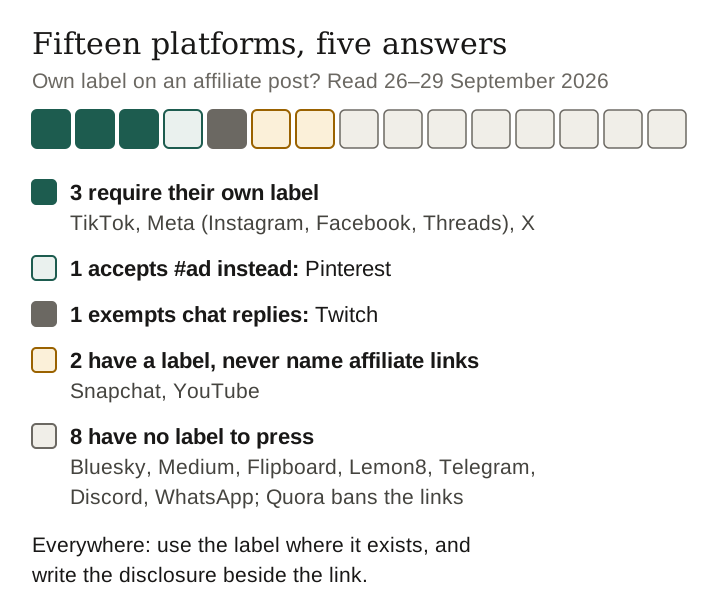
We read fifteen platforms' rules between 26 and 29 September and counted: three name affiliate links as needing their own label, one accepts #ad instead, one exempts them, two have a label but never mention them, and eight have no label to press.
Three of fifteen: TikTok, Meta (Instagram, Facebook and Threads) and X require their own label on affiliate posts, by name. Pinterest names affiliate links but accepts #ad. Twitch exempts links shared in answer to chat questions. Snapchat and YouTube have labels but do not mention affiliate links. The other eight have no label we could find: Bluesky, Medium and Flipboard write a disclosure duty into their own rules, Lemon8 applies TikTok’s policy, Telegram leaves disclosure to local law, Discord and WhatsApp do not address it, and Quora bans affiliate links in answers. None says its label replaces a legal disclosure. Read 26–29 September 2026.
Fifteen platforms, side by side
| Platform | Affiliate links named? | Own label required for an affiliate post? | What the policy says | Read |
|---|---|---|---|---|
| TikTok | Yes | Yes | Branded content includes a product “for which you will receive a commission on any sales”, for example through an affiliate link or a promotional code; you “must enable the commercial content disclosure toggle” | 26 Sep |
| Instagram, Facebook, Threads (Meta) | Yes | Yes | “You create a post with an affiliate product link” → use the paid partnership label; commissions “constitute an exchange of value” | 26 Sep |
| Yes | No, #ad also accepted | “Be transparent about the commercial nature of your content and about your links”; disclosure “such as the use of #ad” or the paid partnership tool | 26 Sep | |
| Twitch | Yes, as an exemption | No, when answering chat | Tool not needed when “you or your mods share affiliate links in response to questions from your community” | 26 Sep |
| Snapchat | No | Not stated; our reading: yes | Commercial content includes content “incentivized to post by receiving monetary payment”, which must use the paid partnership tool | 26 Sep |
| YouTube | No | Not stated | Branded content is content “influenced by a brand partner in exchange for something of value”; YouTube may auto-apply the label if it detects undisclosed branded content | 26 Sep |
| X | Yes | Yes | A product that earns you a commission “through affiliate links or discount codes” is a paid partnership; such posts “must have the ‘Paid Partnership’ disclosure on” | 29 Sep* |
| Lemon8 | Through TikTok’s policy | Not stated for Lemon8 itself | US Terms send paid promotion to TikTok’s Branded Content Policy, which names affiliate links and promo codes | 28 Sep |
| Bluesky | No | No label exists | “Do not post undisclosed commercial content … without clearly identifying its commercial nature”; disclose in your words | 27 Sep |
| Medium | Yes | No label named | Affiliate links allowed; you must disclose them, and “a simple sentence in the footer” is enough | 27 Sep |
| No | No label named | Disclose “in accordance with FTC rules” anything posted for compensation, gifts or other consideration | 28 Sep | |
| Telegram | Only for its own scheme | None found | Affiliate programme terms: disclosing affiliate relationships where local law requires it is the participant’s job | 29 Sep |
| Discord | No | None | Rules do not address disclosure; unsolicited bulk messages banned | 27 Sep |
| No | None | Channel terms treat links as a normal update; disclosure not addressed | 27 Sep | |
| Quora | Yes | — | “Affiliate links are not allowed” in answers | 27 Sep |
Each platform’s own policy pages, read on the date shown; the nine rows added on 29 September draw on our platform pages linked below, each read first-hand on its date. *X read from the Internet Archive’s capture of 6 September 2026, because help.x.com refused our request on 29 September. Counted by us: 3 of 15 require their own label by name; 8 of 15 have no label we could find.
Last verified 29 September 2026 against X’s Paid Partnerships Policy (capture of 6 September 2026) and Telegram’s affiliate programme terms; TikTok, Meta, Pinterest, Twitch, Snap and YouTube as read on 26 September 2026, and the other seven on the dates in the table

X joined the label group in 2026
X is the one platform in the table whose rule moved this year. Its Paid Partnerships Policy defines a paid partnership as a third-party brand compensating you to promote its product, and then says such products are ones that “generate a commission for you from sales, for instance, through affiliate links or discount codes”. That sentence puts every affiliate post on X inside the policy. Three rules follow:
- Turn on the disclosure. Posts “must have the ‘Paid Partnership’ disclosure on”, set in Content Disclosure when you create the post; X then labels the post.
- No click needed to understand it. The product or call to action must be clear “without requiring users to click on any additional links”.
- Some products are barred. The policy lists categories not eligible for paid-partnership promotion at all; our guide to affiliate links on X lists them and traces how the required disclosure changed three times between June 2024 and September 2026.
The policy also names the FTC’s Endorsement Guides and says you remain responsible for complying with them, which is the same position TikTok and Meta take.
How to read the silent ones
Snapchat
Snap's Commercial Content Policy covers content you were “incentivized to post by receiving monetary payment or free gifts”. A commission is monetary payment for promoting a product, so the label applies on our reading. Snap is also the only platform of the six that requires the label on your own products. Our Snapchat page has the detail, including Snap's published rule that off-platform links make a Snap ineligible for recommendation.
YouTube
YouTube's definition turns on a “brand partner”. An affiliate programme is an arrangement with a retailer or network rather than a sponsorship, and the policy does not say which side of the line it falls on. The policy does say two things that settle the practical question: it applies to video descriptions and comments, where affiliate links live, and YouTube may apply the label itself if it detects undisclosed branded content. Ticking the paid promotion box on a video built around affiliate products costs you little; YouTube says ads still run, though branded content is removed from YouTube Kids.
The eight with no label to press
Eight of the fifteen offer nothing to switch on. That does not mean nothing is required; it means the words do all the work. They fall into four groups:
Rules that require a written disclosure
- Bluesky bans undisclosed commercial content in its Community Guidelines. Our Bluesky page measured 792 public affiliate posts: 14.6% used a disclosure word.
- Medium allows affiliate links and requires you to disclose them; a footer sentence is enough. It bans third-party sponsorships outright.
- Flipboard requires disclosure “in accordance with FTC rules” for anything posted for compensation.
Another platform’s rule
Lemon8’s US Terms send paid promotion to TikTok’s Branded Content Policy. Whether Lemon8 shows TikTok’s toggle in its own app is not stated in what we read, so disclose in the caption.
Disclosure left to the law
Telegram’s only affiliate rules are the terms of its own Stars referral scheme, which make disclosure under local law the participant’s responsibility. Discord and WhatsApp do not address disclosure at all. In the US the FTC’s rule applies on all three regardless; see our Telegram page and our Discord and WhatsApp page.
No affiliate links at all
Quora’s answer rules say “Affiliate links are not allowed.” There is nothing to label.
One rule that works everywhere
A creator posting the same product across these platforms is working under fifteen rule sets. The one setting that is correct on every platform we read is use the platform's label wherever it exists and write the disclosure in the text beside the link. It over-complies on Pinterest and in a Twitch chat reply, and costs nothing there; it is exactly right on TikTok, Instagram and X; it covers the two that have a label but say nothing; and on the eight without a label, the written half is the whole disclosure.
Keep reading
Frequently asked
Does TikTok require a label on affiliate links?
Yes. TikTok's Branded Content Policy, effective 31 August 2026, includes content where you earn a commission “via an affiliate link or promotional code” and requires the commercial content disclosure toggle.
Does Instagram require the paid partnership label for affiliate links?
Yes. Instagram's help lists “You create a post with an affiliate product link” and says to use the paid partnership label. The same Meta policies govern Threads.
Does YouTube's paid promotion box cover affiliate links?
YouTube's Branded Content Policies do not mention affiliate links. They cover content influenced by a brand partner for something of value, and YouTube may apply the label itself if it detects undisclosed branded content.
Is #ad enough on Pinterest?
Yes for Pinterest's own rule: its guidelines name “#ad” or its paid partnership tool as ways to disclose.
Is a platform label enough to meet the FTC rules?
No platform we read says so. Each says you remain responsible for the law, and Twitch says its tool “will not always be sufficient”. Keep a written disclosure next to the link.
Does X require a label on affiliate links?
Yes. X's Paid Partnerships Policy counts products that earn you a commission "through affiliate links or discount codes" as paid partnerships, and such posts must have the "Paid Partnership" disclosure turned on. We read the Internet Archive's capture of 6 September 2026.
Do Discord, WhatsApp or Telegram have a paid partnership label?
No. None of the three offers a label for commercial posts in the documents we read, so a written disclosure in the message itself is the only way to disclose an affiliate link there.
Sources
- TikTok Branded Content Policy, effective 31 August 2026.
- Instagram: What is considered branded content.
- Pinterest Commercial and Branded Content Guidelines, last updated April 2025.
- Twitch Branded Content Guidelines.
- Snap Commercial Content Policy, effective 2 July 2026.
- YouTube Branded Content Policies.
- X Paid Partnerships Policy, Internet Archive capture of 6 September 2026, read 29 September 2026.
- Telegram Terms of Service for Affiliate Programs, read 29 September 2026.
- The six platforms above read in a browser on 26 September 2026; the other rows from our platform pages, each read first-hand on the date in the table. This page is not legal advice.
Keep reading
How this page was made. Drafted with AI (Claude); not yet independently re-checked. How we work